
Contents▾
- Why it is worth planning your route to Novorossiysk in advance
- How to get to Novorossiysk by plane: which airport is the nearest
- How to get to Novorossiysk by train
- How to get to Novorossiysk by bus
- To Novorossiysk by car: which roads and what to consider
- Transport on the spot: how to get around the city and what to see on the way
- Where to stay
- What to choose and which way is the most convenient
Understanding how to get to Novorossiysk is easier if you take into account from the start its role as a major port and the final railway station on the coast. It is convenient to travel here by train, intercity bus and car, while the nearest route involving a flight usually requires a further overland transfer.
Why it is worth planning your route to Novorossiysk in advance
Novorossiysk stands on the shore of Tsemes Bay and functions as a major transport hub: railways, highways and port logistics all converge here. Because of this, the trip to the city is rarely the “last easy step”: in summer the flow to the coast increases, and on windy days you can feel the famous Novorossiysk bora on the approaches and embankments - a strong cold wind from the mountains.
But there is also an advantage: once you arrive here, you find yourself not only in a working port but also in a city with a very clear geography. From the railway station and central streets, it is easy to get to Admiral Serebryakov Embankment, to the Malaya Zemlya (Little Land) memorial in the Stanichka area, to the Mikhail Kutuzov museum cruiser, and if you have another day, head out to Abrau-Dyurso for the lake and walking routes. For a first visit, it helps to open a map of Novorossiysk itself in advance and understand what matters more to you: the centre, the port embankment, or heading towards the Yuzhny District and Abrau.
How to get to Novorossiysk by plane: which airport is the nearest
If you are looking for the nearest airport to Novorossiysk among the options realistically available for the trip, route planning usually focuses on Sochi International Airport (Adler). From there the journey continues overland: most often by train with a transfer, intercity bus or rental car. This option suits those who are combining the trip with other cities on the coast anyway, but it is not the shortest way to reach Novorossiysk directly.
In practice, it is better to build a flight-based route like this: fly in, allow extra time for the transfer and do not schedule important meetings on the day of arrival. If you are travelling for walks, this is not so critical; if your goal is to make it to an excursion in Abrau-Dyurso, a boat trip around the bay or visits to the memorials, it is better to move the busy part of the programme to the next day.
Novorossiysk has no airport of its own with a short transfer to the centre, so many people end up choosing the train. Especially if the goal is to get there calmly without extra changes and arrive directly in the city, from where it is convenient to travel to the Defence Line memorial, the Myskhako area or the road to the viewpoints above the bay.
How to get to Novorossiysk by train
For many people this is the most straightforward option if you are looking into how to get to Novorossiysk by train. The city is the final point of the railway line from Krasnodar, so long-distance trains come here without the need to change right at the end of the route. The main advantage is that you arrive directly in the urban setting rather than at a remote point with a long transfer.
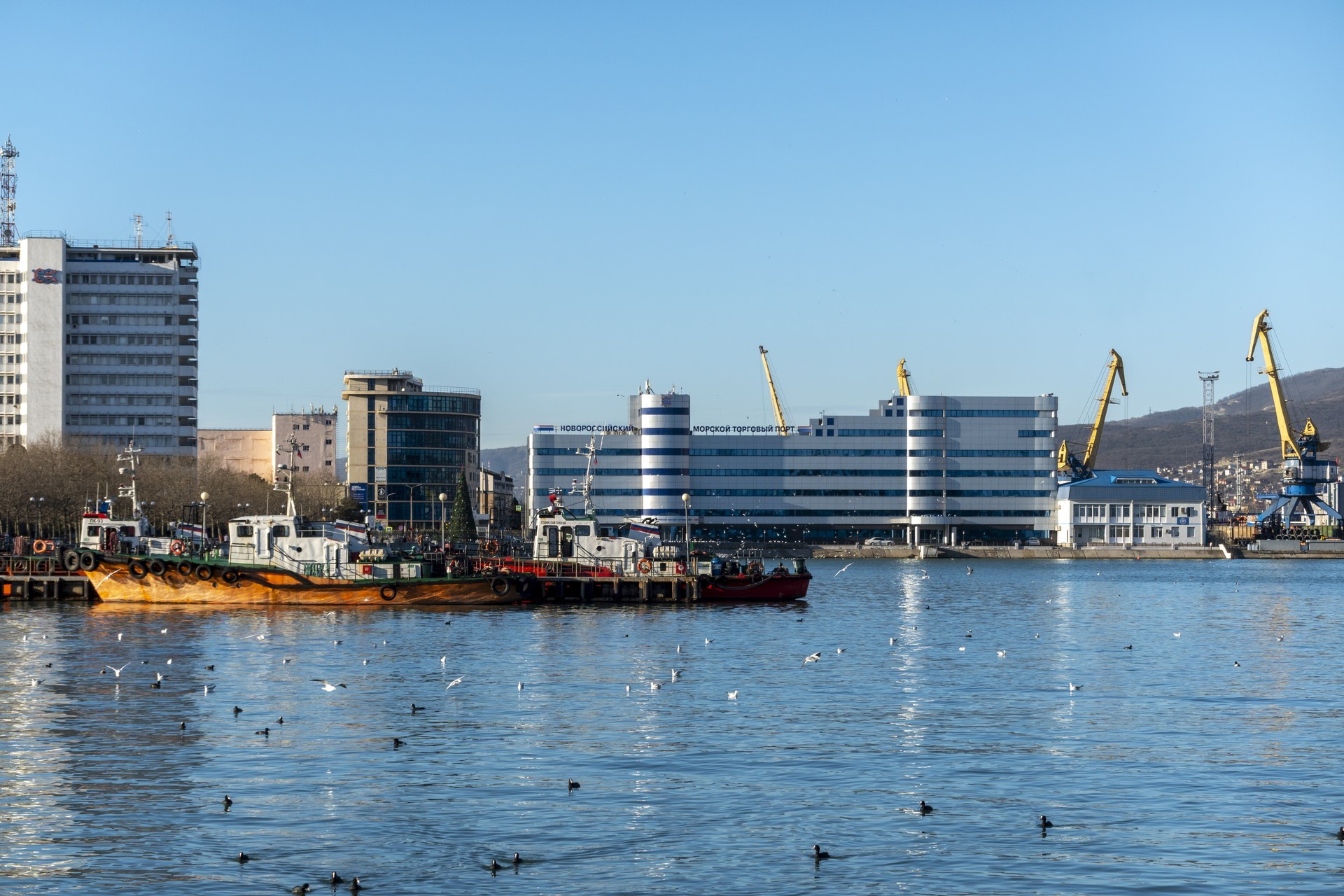
The railway station is convenient because from there it is relatively quick to reach the centre and the embankment. If you plan to go for a walk, you can start with the bay and the monuments of military history. Novorossiysk is a Hero City, and many of its most powerful places are connected specifically with the events of the Great Patriotic War (World War II): the Malaya Zemlya memorial recalls the bridgehead that was held for 225 days, while the Valley of Death and the Defence Line help you understand the scale of the fighting not from a textbook, but from the terrain itself.
If you are travelling in summer, it is better to look for tickets on direct routes in advance: demand on southern routes is high. If you arrive at night, think in advance about how you will get to the district you need, because the city stretches along the bay, and the trip from the station area towards the Yuzhny District or Myskhako takes more time than it seems on the map.
- Train advantage: minimal changes and straightforward logistics on arrival.
- Disadvantage: in season it is harder to choose convenient seats and dates.
- Who it suits: families, those carrying a lot of things, and travellers without a car.
How to get to Novorossiysk by bus
If you need a more flexible and often budget-friendly option, you can consider intercity buses. This is a practical answer to the question of how to get to Novorossiysk by bus, especially from cities in Krasnodar Krai and neighbouring regions. The bus is convenient when there is no suitable train or when you are travelling light.
But a bus route has its own specifics. First, travel time depends on traffic levels, especially on the approaches to the coast. Second, in summer the difference between “on schedule” and the actual arrival time can be noticeable. If all you have planned next is a short walk along the embankment, that is not a problem. But if you want to go on to Abrau-Dyurso, Myskhako or walk along the coastal stretch near Sudzhuk Spit the same day, it is better not to schedule connections too tightly.
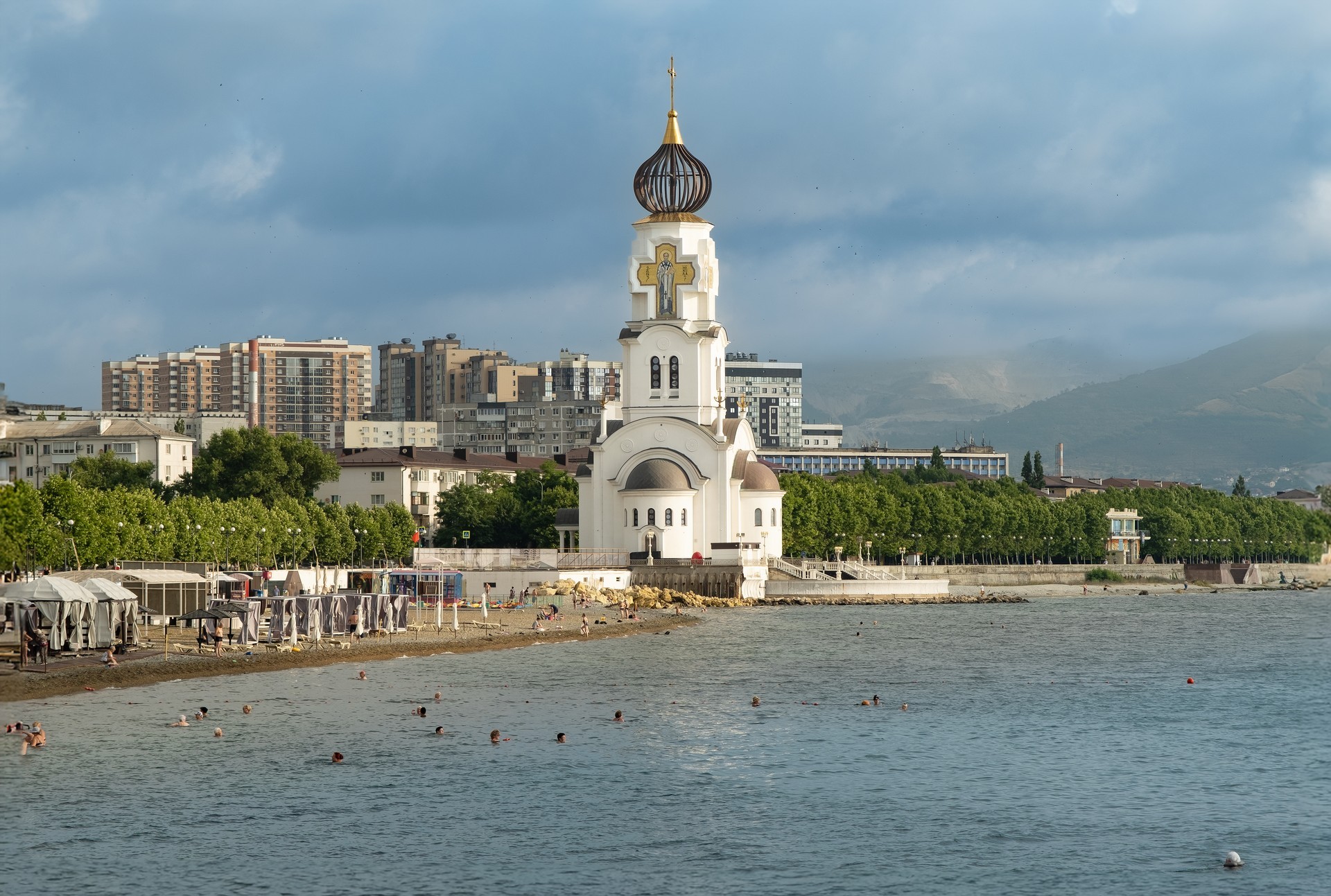
The bus is especially convenient for those travelling from nearby points on the coast. Once you arrive, it is easy to build a short route: see Sudzhuk Lagoon, walk along Admiral Serebryakov Embankment, reach the Mikhail Kutuzov cruiser and end the evening near the city beach. For this kind of scenario, the bus is entirely justified.
To Novorossiysk by car: which roads and what to consider
A trip to Novorossiysk by car is good because you are not tied to a schedule and can include the surrounding area. People usually drive to the city along federal and regional highways through Krasnodar Krai, and on the final sections it is important to allow time for heavy traffic, especially towards the sea. Even if the distance seems short, the average speed on the approaches often drops.
This option has an obvious bonus: on the way and after arrival, you can see places around the city. The clearest excursion is Abrau-Dyurso with Lake Abrau and walking routes above the water. Another direction is Myskhako, where the sea feels calmer than in the port part of the bay. If you are interested in history, make sure to go to the Malaya Zemlya memorial and the Defence Line. And if you want air and panoramas, look for viewpoints on the roads above Tsemes Bay: from above you can see especially well how the city is set between the sea and the slopes of the Markotkh Range.
From experience: always keep water, a hat and a light windbreaker in the car, even in summer. It is hot on the coast, but in Novorossiysk the wind can be sharp. For trips around the surrounding area, ordinary sports shoes will be useful: in Abrau-Dyurso and near the coastal trails the asphalt quickly ends, while pebbles and dusty climbs become tiring in sandals.
- Car advantage: freedom of route and access to the surrounding area.
- Disadvantage: traffic jams on the approaches and searching for parking in popular places.
- Who it suits: those who want to combine the city, the sea and short trips around the area.
Transport on the spot: how to get around the city and what to see on the way
Once the question of how to get to Novorossiysk has already been solved, it remains to understand how to move around inside the city. If you only have the centre and the embankment in your plans, taxis and city transport are enough. If you want to include the memorials, the cape and the wine valley towards the lake, a car is more convenient.
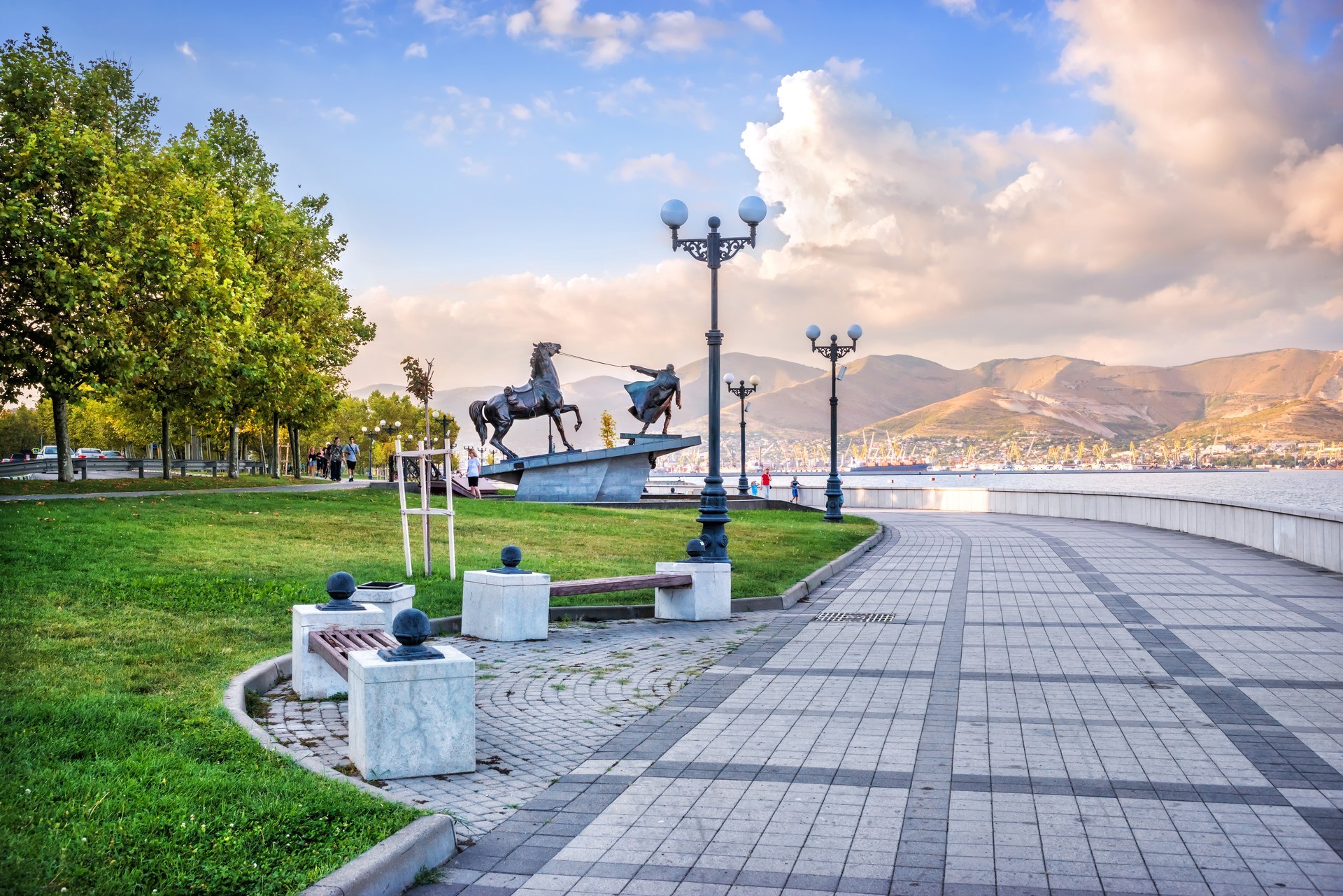
For the first day, I would advise the following order. First, Admiral Serebryakov Embankment and the bay, to get a feel for the scale of the port. Then the Mikhail Kutuzov museum cruiser as one of the most prominent points by the water. After that, the Malaya Zemlya memorial in the Stanichka area: here you understand well why military memory in Novorossiysk is not decorative, but built into the urban landscape. If you still have energy, you can go to Sudzhuk Spit and Sudzhuk Lagoon: this is already a different Novorossiysk, not a port city but a seaside one, with walks by the water and an open horizon.
On the second day, it makes sense to go to Abrau-Dyurso. Besides the lake itself, there are good short walks over the hills and views of the water, especially closer to evening when the heat eases. Another option is the Myskhako area, where it is convenient to combine the sea, viewpoints and an unhurried trip without a long route. If, however, you came for history, also look for the Valley of Death: a place that is not easy in mood, but important for understanding what happened here during the fighting for the city.
Where to stay
If arrival logistics are important and you want an option closer to city routes, take a look at these properties:
- Brigantina — hotel, located about 930 m from the centre, prices from 4,323 RUB. Suitable if you want to be closer to the central part of the city; there is wi-fi, a cafe and free parking.
- Dublin — hotel about 1,790 m from the centre, prices from 3,800 RUB. A convenient option for those for whom an easy city departure matters without long transfers; there is a cafe, wi-fi, free parking, and pets are allowed.
- Okean — hotel about 4,250 m from the centre, prices from 3,900 RUB. Suitable for those travelling by car and wanting to deal with parking more calmly; there is wi-fi and free parking.
- Olymp — hotel about 5,490 m from the centre, prices from 4,700 RUB. Convenient for road trippers; services include a transfer, cafe, wi-fi and free parking.
- Mikhalych Guest House — guest house about 5,000 m from the centre, prices from 2,300 RUB. Suitable if you need a more budget-friendly option for a short stop; there is wi-fi.
What to choose and which way is the most convenient
If you need the simplest scheme without extra changes, choose the train: for Novorossiysk this is usually the calmest way. If it is important to save money or you are travelling from neighbouring cities, the bus will do, but allow extra time. If you want to see not only the city itself, but also Abrau-Dyurso, Myskhako, Sudzhuk Spit and the viewpoints above the bay, it is better to go by car.
Novorossiysk itself is worth exploring beyond just one embankment. Here the port stands next to the memory of war, beach routes next to memorials, and a short drive from the centre quickly changes the picture to a lake, hills and the open sea. That is why it is better to plan the journey here not as transit, but as part of the trip.
Frequently asked questions
For walks and trips around the surrounding area, late spring, early summer and the velvet season (early autumn) are more comfortable, when the heat is easier to tolerate. In summer the sea is warmer, but the roads and embankments are noticeably busier.
Even in summer, water, a cap, sunscreen and a light windbreaker are useful because of the strong wind by the bay. If you plan to visit Abrau-Dyurso, Sudzhuk Spit or the viewpoints, take comfortable closed shoes.
For the city itself and the main points by the bay, 1-2 days are enough. If you want to add Abrau-Dyurso, Myskhako and coastal walks without rushing, it is better to allow 3-4 days.
It depends greatly on the departure point and the season. Roughly speaking, the bus is usually cheaper than the train, while a car trip is better value for a group, but in addition to fuel you should add toll road sections, food on the way and parking.
The route is technically not difficult if you are used to long highway drives. The main nuances are heavy traffic on southern roads, hairpin bends in some parts of the region, and the wind on the coast.
Yes, if you do not overload the programme with transfers in one day. The most convenient options are a train or a car with one or two stops, and once there it is better to alternate the embankment, short walks and outings without long walking routes.