
Contents▾
- Where to Stay in Anapa: How the Resort Is Laid Out
- Central Anapa: Embankment, Museums, and Short Walking Routes
- Dzhemete and Pionersky Prospekt: Wide Sand and a Long Shoreline
- The High Bank, Lysaya Gora, and Goluboy Zaliv (Blue Bay): Anapa for Walks and Views
- Where to Go from Anapa: Sukko, Bolshoy Utrish, and Blagoveshchenskaya
- How to Choose an Area and What to Consider Before the Trip
- Where to Stay
- Summary: Which Area of Anapa to Choose
If you are deciding where to stay in Anapa, first get to grips not with hotel names but with the resort's geography itself. Anapa has areas with very different characters: the central part is convenient for walks and museums, Dzhemete is chosen for its long sandy shore, and the high bank draws those who care about views, trails, and a calmer pace.
Where to Stay in Anapa: How the Resort Is Laid Out
Anapa is not only a beach city, but also a climatic and balneological resort, so holidays here are often built around the sea, walks, and short trips into the surrounding area. Once you are here, it becomes especially clear that the city is divided less by administrative districts than by type of holiday: the centre, the coastal strip by the sandy beaches, the high bank, and the neighbouring settlements towards Vityazevo and Sukko.
If it matters to you to step out onto the embankment in the evening, drop into a cafe, and also have museums and the city park close at hand, it makes more sense to look at the central part. If you want wide sand and less urban bustle, Dzhemete is more convenient. For walks along the cliff, viewpoints, and a more intimate atmosphere, the high bank area is better suited. And if you want to alternate the sea with outings, it is worth keeping Sukko, Bolshoy Utrish, and Blagoveshchenskaya in mind — these are no longer central Anapa, but this is exactly where the holiday feels different.
I would choose an area not by the formula of "as close to the sea as possible at any cost", but by what the day will be like: how much you walk, whether you like a sandy entry into the water, whether you are ready to travel to natural sites, and whether quiet at night matters to you.
Central Anapa: Embankment, Museums, and Short Walking Routes
The centre is a good answer to the question of where to stay in Anapa if you are travelling without a car and do not want to depend on transport. Here it is convenient to walk along the embankment, go down to the city beaches, and quickly reach the places that make it worth taking a break from the sea in Anapa.
Of the city sights, I always recommend starting with the Russian Gates — this is a surviving fragment of the Ottoman fortress. Nearby is the Gorgippia Archaeological Museum-Reserve, where you can see the excavation of an ancient city in the open air: not a model, but real quarters of an ancient settlement. For a resort city, this is a rare chance to switch from the beach to the history of the place in just one hour.
Another convenient point in the centre is the Central Embankment with access to the beaches and a promenade section. When the heat eases, it is pleasant to walk from here to the 30th Anniversary of Victory Park, and then turn towards Lysaya Gora (Bald Mountain). This is no longer a "15-minute walk in flip-flops", but from above you get a clear view of Anapa's coastline: the sandy part of the city quickly gives way to a higher and steeper shore.
The centre suits those who want to alternate the beach with walks and museums. But there is also a nuance: in the busiest season there are more people here, and the nearest city beaches are usually more crowded than those on the way out towards Dzhemete.
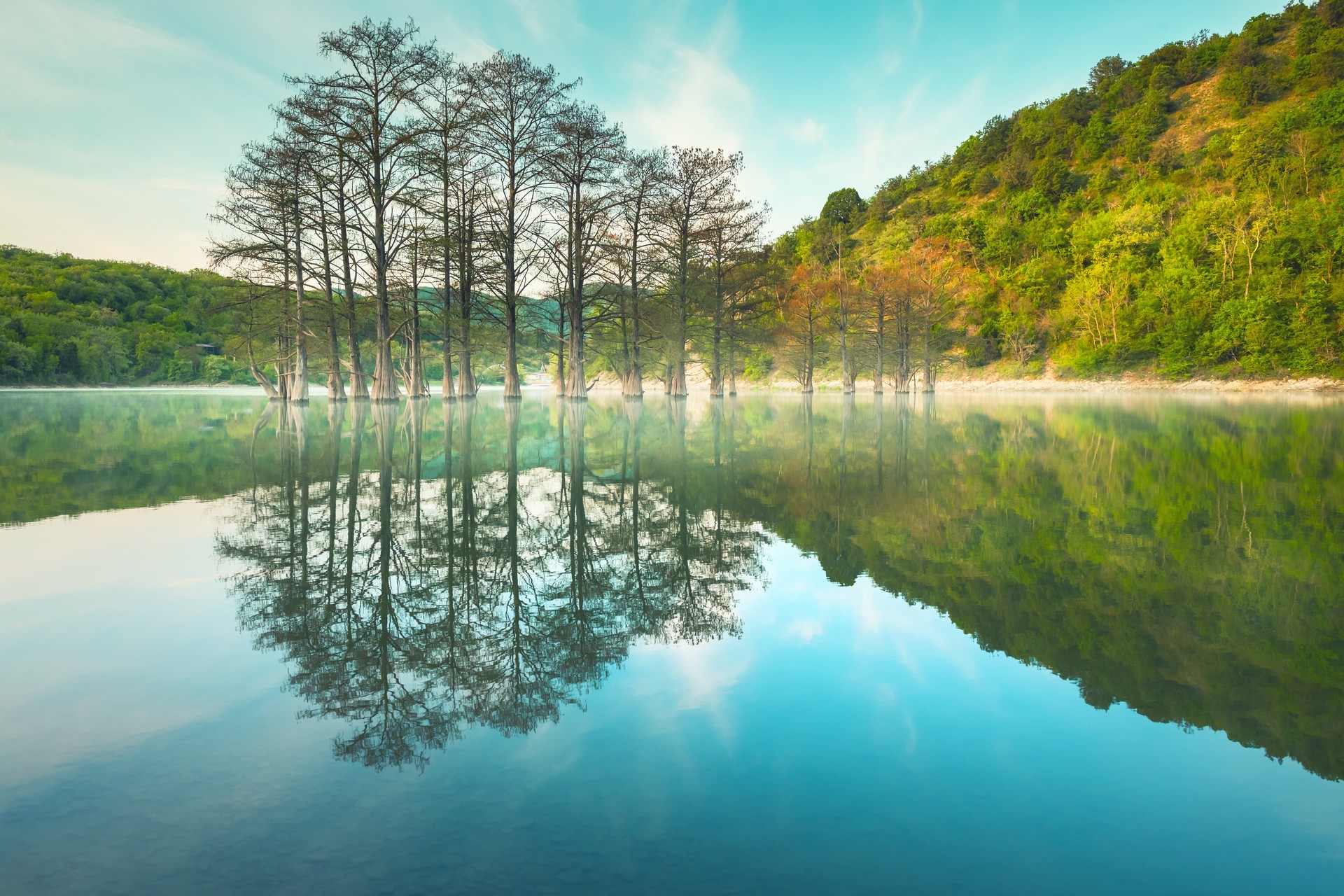
Dzhemete and Pionersky Prospekt: Wide Sand and a Long Shoreline
If people ask which area to stay in in Anapa for the sake of the sea, I most often name Dzhemete. This is a strip of wide sandy beaches north of the centre, where the sea and shore become the main substance of the day. It is most convenient here for those who want to walk to the water in the morning without long urban stretches, and in the evening stroll through a calmer resort area.
Dzhemete Beach stretches along a line of dunes, and this landscape is exactly what best distinguishes the area from the centre. The shore here is usually perceived as more spacious than in the city part, and the sand as softer and lighter. With children, this area is often more convenient because of the gentle entry into the water, but on windy days the open stretch can be hot and almost without shade, so an umbrella and water are essential.
Pionersky Prospekt is also good because it is convenient from here to head towards Vityazevo. The settlement itself is interesting not only for the beach: in this part of the coast the steppe-like feeling of space is much stronger, and the coastline is longer and less "urban". If you prefer not a promenade with music but a long walk on sand, this is exactly where it is easier to find the right rhythm.
For those hesitating between two Black Sea resorts, it is useful to compare the character of the shores and the urban rhythm in the article Anapa or Gelendzhik: where is it better to go?.
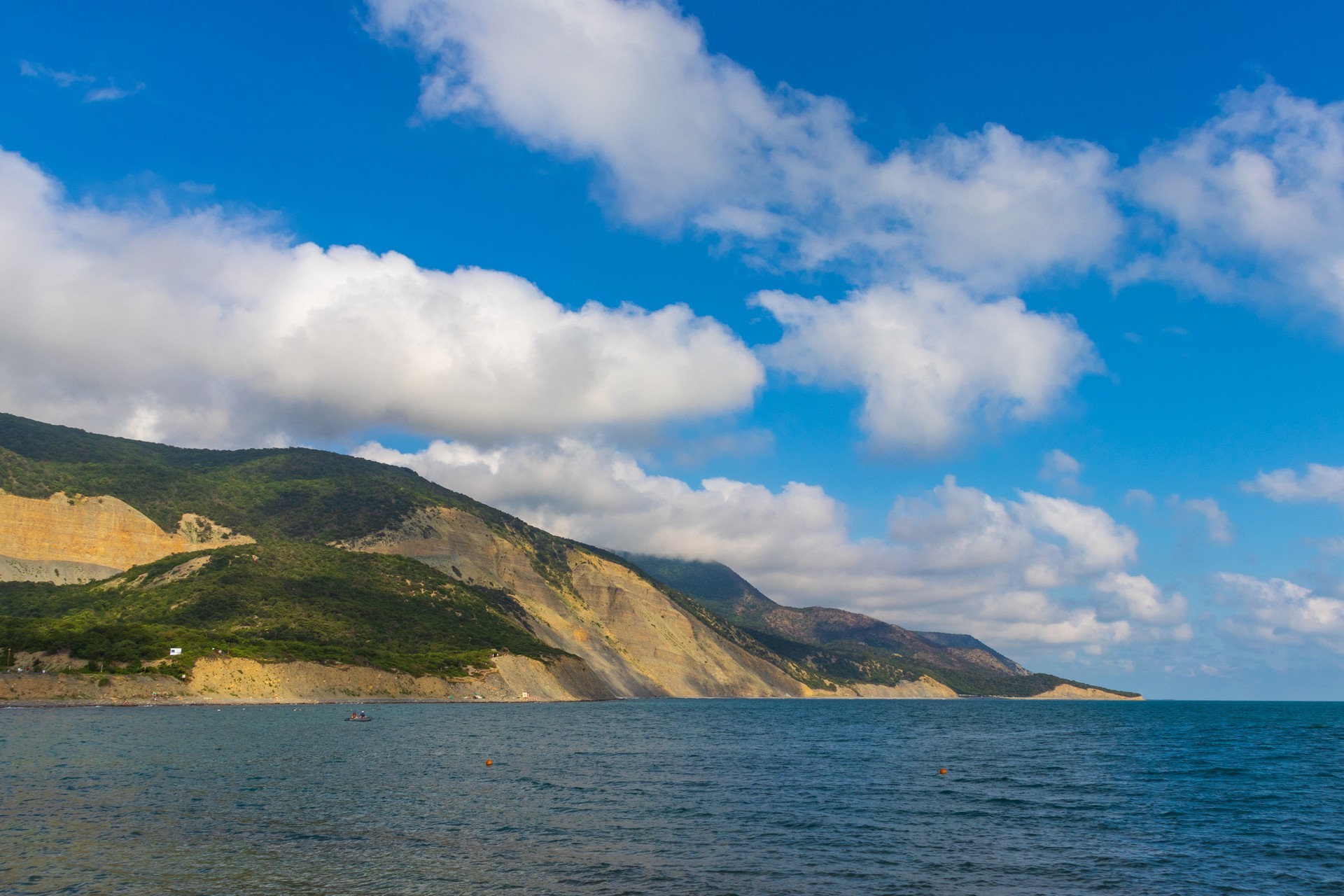
The High Bank, Lysaya Gora, and Goluboy Zaliv (Blue Bay): Anapa for Walks and Views
For those looking for the best area of Anapa not only for swimming but also for walks, I would advise considering the high bank. Here the sea feels different: not through a long sandy gentle entry, but through the cliff, trails, and viewpoints. This option is chosen by those for whom a morning route along the shore and the chance to step out to a calm view of the water matter more.
Lysaya Gora is one of the straightforward points for a walk. The ascent is not mountaineering, but in the heat it is better to go early in the morning or closer to evening: there is little shade, the wind dries you out deceptively, and the elevation gain is still noticeable. From the top, you can clearly see how the coastline changes and where the urban beach section ends.
Goluboy Zaliv of Anapa: a picturesque corner of the Black Sea coast is worth a separate outing. People go there not for infrastructure, but for the colour of the water and a more "open" sea landscape. On the way to places like this, I always advise taking closed shoes rather than only beach flip-flops: on rocky sections and trails, they are noticeably more convenient.
If you do not like a noisy resort street under your windows in the evening, the high bank often turns out to be a good compromise: you can get to the centre, while the feeling of the sea remains calmer and less crowded.
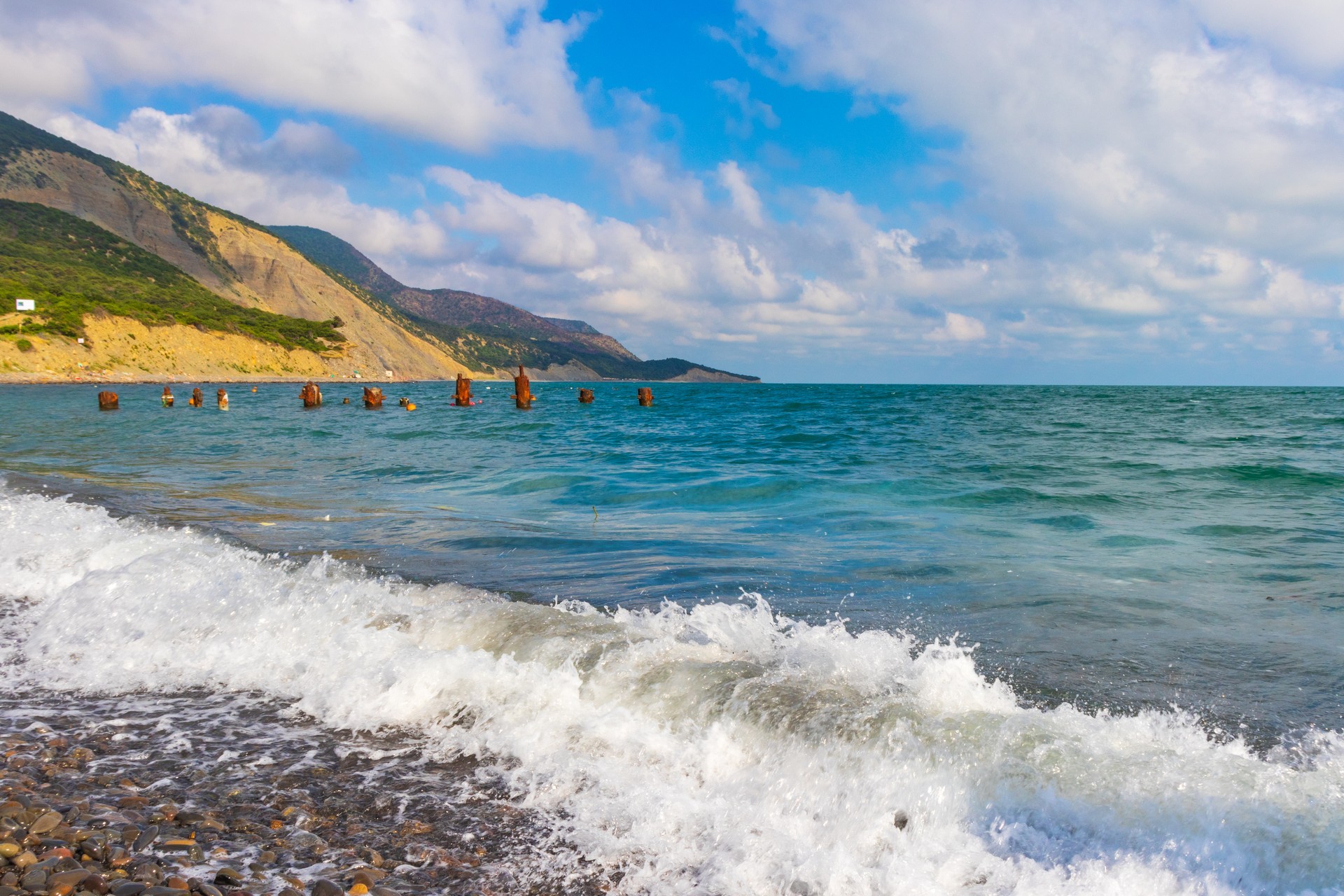
Where to Go from Anapa: Sukko, Bolshoy Utrish, and Blagoveshchenskaya
Even if you stay in Anapa itself, it is better to leave one or two days for the surrounding area. The question "where is it better to stay in Anapa" is often resolved more easily when you understand where you will be going. If your plans include nature trails and a more indented shoreline, look towards Sukko and Bolshoy Utrish.
Sukko is known for its valley among low mountains and for Lake Sukko, near which people like to walk during the cooler hours. From here it is convenient to go to Bolshoy Utrish — this is a settlement by protected stretches of coast, where the sea and terrain no longer resemble flat sandy Anapa at all. Bolshoy Utrish is valued for its juniper-pistachio slopes and trails along the shore; on routes like these it is especially important to bring a supply of water and not count on frequent kiosks along the way.
In the other direction, the Cossack village (stanitsa) of Blagoveshchenskaya is interesting. It is chosen by those who like long sandy spits, wind, and a freer, almost steppe-like landscape. This is a good option for a separate day by the sea if the city part of Anapa feels too lively.
There are also shorter urban outings. For example, a walk along the embankment with a transition to the viewpoint sections of the high bank, and then a return to the centre through the park — a simple half-day route without complicated logistics.
How to Choose an Area and What to Consider Before the Trip
In short, Anapa's holiday areas can be divided by the day's scenario:
the centre — if you want to walk to the embankment, museums, the park, and city beaches;
Dzhemete and Pionersky Prospekt — if the wide sandy shore and relaxing by the water are your main priorities;
the high bank — if you like views, walks, and a calmer atmosphere;
trips towards Sukko, Bolshoy Utrish, and Blagoveshchenskaya — if you want to alternate an urban resort with nature routes.
In practical terms, I would advise bringing more than just beach things. In Anapa, a cap or bucket hat, sunscreen, a light long-sleeved shirt for walks along the open shore, and trainers or sandals with secure straps for trails and descents will be useful. For trips to Utrish and to viewpoints, water and a small snack are essential.
As for budget, the guideline is this: an urban holiday with beaches and walks can be planned without major expenses, while it is better to set aside a separate amount for outings and excursions. A boat trip, transfer to remote beaches, or an organised trip into the surrounding area usually requires an additional budget of roughly from several hundred to several thousand RUB per person depending on the format.
As for the journey, it is important to remember one thing: Vityazevo Airport, also known as Anapa Airport, serves the city, but civilian flights may be suspended, so it is better to double-check the route in advance and, if necessary, plan the journey via other transport hubs in Krasnodar Krai with an onward overland transfer.
Where to Stay
If you have already decided on the area, here are a few options in Anapa worth considering.
Yakor — a hotel in Anapa, around 270 m from the centre, prices from 1,700 RUB. Suitable for those who value a central location and short walks into the city.
Sorelli — a holiday home, around 510 m from the centre, prices from 1,489 RUB. Useful features: pets are allowed, and there is Wi-Fi.
Karavella — a hotel, around 760 m from the centre, prices from 1,800 RUB. There is free parking and Wi-Fi, which is convenient for those arriving by car.
Atlantida — a hotel, around 970 m from the centre, prices from 1,800 RUB. There is free parking, Wi-Fi, a transfer service, and a cafe.
Chaika — a hotel, around 2,050 m from the centre, prices from 1,550 RUB. Suitable for those who want to be outside the very centre but still within the urban area.
Summary: Which Area of Anapa to Choose
If you want a resort rhythm with walks, museums, and an evening embankment, choose the centre. If the main goal is a sandy beach and the sea a few steps away, it is better to look at Dzhemete and Pionersky Prospekt. If quiet, a view of the water, and walks along the high bank matter more, take a closer look at this part of the city.
Anapa is convenient because here you do not have to limit yourself to one beach: you can spend one day in the centre, go towards Dzhemete the next, and devote the third to Sukko or Bolshoy Utrish. This rhythm helps you understand the place better and choose the stretch of coast that suits you.
Frequently asked questions
For a beach holiday, people most often choose the warm season, when it is comfortable to swim and spend a lot of time by the water. If you want to walk more along the high bank, travel to Sukko and Utrish, and get less tired from the heat, it is more convenient to come during the milder temperature periods at the beginning and end of the season.
For the city itself and its different types of beaches, it is reasonable to allow 4 to 7 days. If you want to add Sukko, Bolshoy Utrish, Blagoveshchenskaya, and unhurried walks, it is better to plan a week or more.
Besides swimming things, a hat, sunscreen, a water bottle, and light clothing with covered shoulders will be useful. For Lysaya Gora, the high bank, and trips to Utrish, it is better to take closed, comfortable shoes.
Yes, especially if a sandy shore and a gentle entry into the water matter — in this respect, Dzhemete is often chosen. But there is little natural shade on the open beaches, so it is worth planning sun protection in advance and avoiding long walks during the peak heat.
The basic budget depends on the season and the format of the trip, but besides accommodation you will usually need to spend on food, city transport, and outings in the surrounding area. Excursions, boat trips, and journeys to remote beaches should be counted separately at roughly from several hundred to several thousand RUB per person.