
Contents▾
- Why a summer holiday in Samara is memorable
- The Volga embankment, Leningradskaya Street, and the old centre
- Where to go for views: Strukovsky Garden, Glory Square, and the helipad
- Coming to Samara in summer for the water: beaches, river islands, and short trips
- The Zhiguli Mountains, Samarskaya Luka, and day-trip places from the city
- What to bring and how much to budget
- Where to stay
- Summary: how to put together a summer trip to Samara
A summer holiday in Samara means the long Volga embankment, city beaches, old quarters, and trips to the Zhiguli Mountains. If you are going to Samara for a few days in summer, it is best to combine the city centre with walks by the water, viewpoints, and short trips around the surrounding area right away.
Why a summer holiday in Samara is memorable
In summer, Samara feels not like an ordinary Volga city, but like a large southern resort centre with a wide riverfront. Here the Volga sets the rhythm for the whole day: in the morning people go to the embankment and the beach, during the day they hide in the shade of old quarters and parks, and by evening they head up to the viewpoints. The city has a combination that is rare for the Middle Volga region: on one side there is a long urban frontage by the water, and on the other the nearby Zhiguli Mountains, which are clearly visible in fine weather.
What I especially like in Samara is not the formal showpiece part, but the transitions between places: from the wide staircases down to the water to quiet streets with merchants' houses, from city noise to the river breeze. If you are only planning your trip, start with a general overview of Samara, and once you are there, leave time not only for museums but also for simple walks without a strict schedule.
The Volga embankment, Leningradskaya Street, and the old centre
The main summer route in the city is the Samara embankment. It stretches along the Volga in several sections, and each has its own mood: in some places there are broad walking alleys, in others a beach rhythm, elsewhere cafes and steps down to the water. In summer it is better to come here in the morning or after 17:00: at midday the sand and open areas heat up strongly.
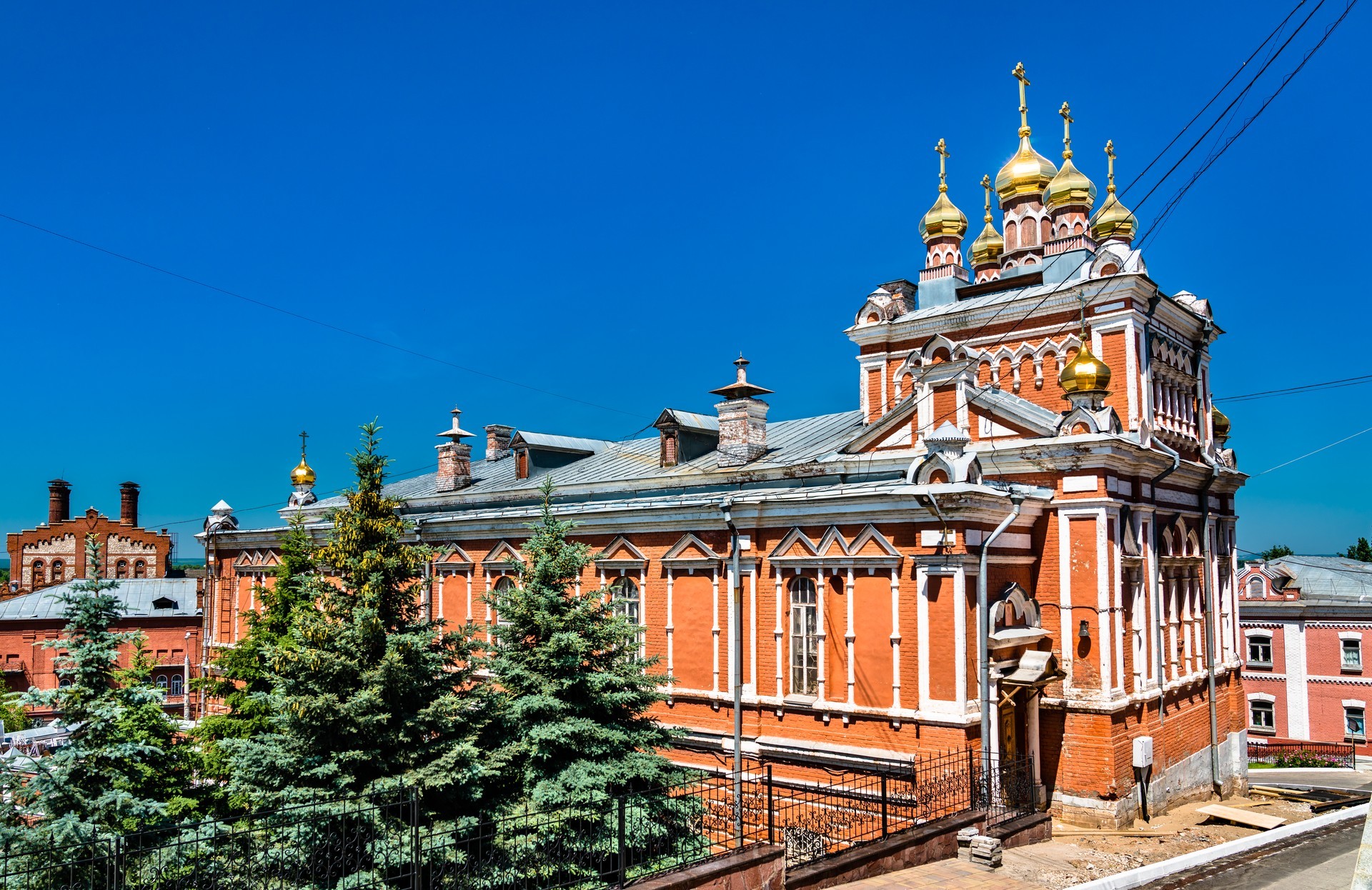
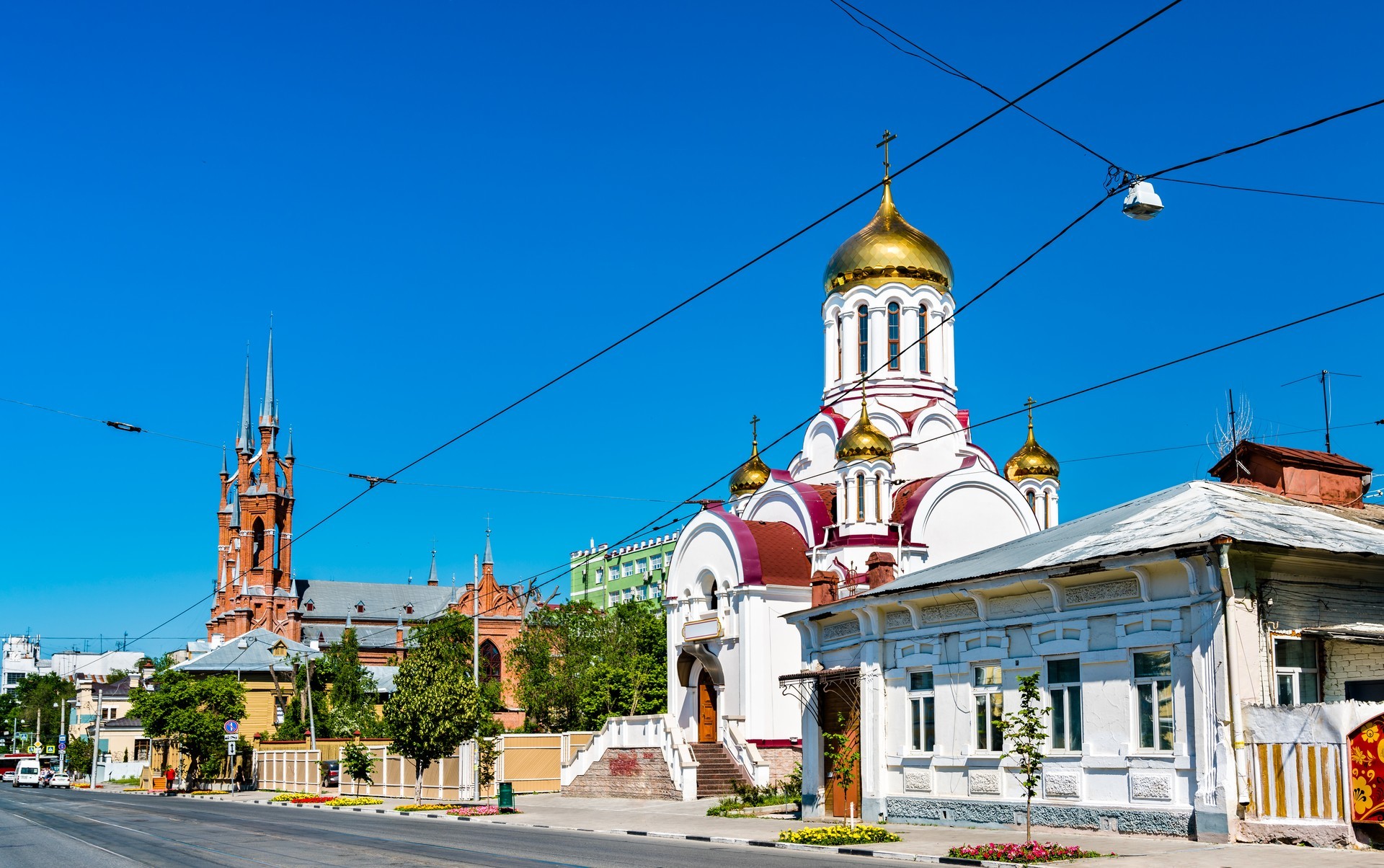
From the embankment it is easy to head into the historic centre, to Leningradskaya Street. This is a pedestrian section where Samara's contrast is especially clear: alongside later facades stand old low-rise houses, courtyards, and fragments of the urban environment for which people love this city no less than for the Volga. On the way, it is worth stopping by Kuibyshev Square, one of the country's largest city squares, and then walking on to the Samara Academic Gorky Drama Theatre, which is easy to recognise by its ornate silhouette.
If you want not just to walk, but to understand the city, allow a couple of hours for the Samara Regional Art Museum or the Museum of Modernism. The second works especially well together with a walk through the old quarters: after the exhibition, you start looking more closely at the windows, doors, grilles, and the asymmetry of the surrounding facades.
Where to go for views: Strukovsky Garden, Glory Square, and the helipad
In summer Samara, viewpoints matter no less than museums. The simplest option in the centre is Glory Square and the viewpoint above the Volga. From here you get a good view of the bend in the river, the city's descents to the water, and the distant line of the Zhiguli Mountains. It is best to come in the evening, when the sun is no longer shining straight into your face and the city looks more three-dimensional.
Further down the slope, it is convenient to walk into Strukovsky Garden, the city's oldest park. In summer this is a good place to rest after the embankment: shade, alleys, and a calmer pace than by the water. If you are travelling with children or simply want a green route without long walks, the combination of "Glory Square - Strukovsky Garden - embankment" works almost perfectly.
For a broader panoramic view, people usually go to the helipad. From here opens one of the most recognisable views over the Volga and the opposite bank. In clear weather, the scale of the river is easy to grasp, and in the evening people often come here specifically for sunset. From experience: the place is open, and the wind by the water and at height feels stronger than in the centre, so a light jacket or a long-sleeved shirt will not be unnecessary even in summer.
Coming to Samara in summer for the water: beaches, river islands, and short trips
If the aim of your trip is specifically a summer holiday in Samara by the water, a promenade along the embankment alone is not enough. The city has equipped beach areas on the Volga bank, and on hot days they become a full part of the city itinerary. But it is important to remember that the Volga here is a large river with a current, so for long swims and especially for children, it is better to choose calm sections and not swim far out.
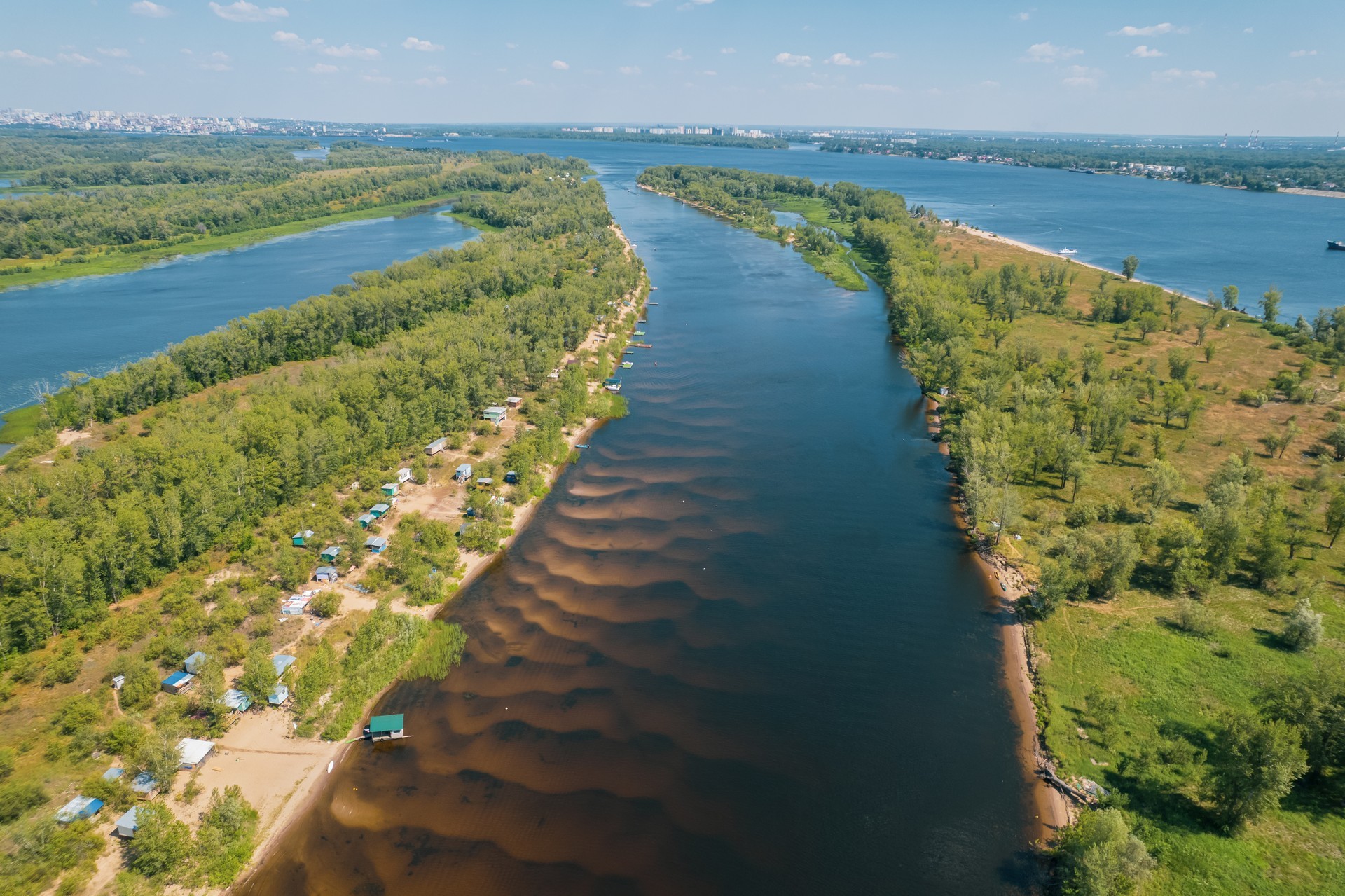
For those who like not only the urban setting but also a freer river environment, the islands and the opposite bank are interesting, reached on sightseeing sailings and private boats. A popular direction is Proran and relaxing on the sandy spits. It is better to plan such a trip as a separate half day: take water, a hat, sunscreen, and footwear that is comfortable both for entering the water and for walking on hot sand.
Another good summer idea is to go to the village of Shiryayevo. It is connected not so much with beach relaxation as with the landscape of Samarskaya Luka, the proximity of the Zhiguli Mountains, and the feeling of a different Volga - no longer urban, but almost like a hiking setting. People usually come here for a walk around the village, the museum theme, and views of the limestone slopes. If you have time, Shiryayevo is worth combining with a longer route through the national park.
The Zhiguli Mountains, Samarskaya Luka, and day-trip places from the city
The strongest summer contrast to urban Samara is a trip towards Samarskaya Luka. The national park occupies a large bend of the Volga, and the Zhiguli Mountains look unexpectedly rugged for the Middle Volga region. Here the day follows a different scenario: not an embankment and coffee, but trails, viewpoints, limestone slopes, and views of the water from above.
Among the clearest day-trip options are the village of Shiryayevo, Mount Strelnaya, and Molodetsky Kurgan. Strelnaya is known for its panoramas of the Zhiguli Nature Reserve and the bends of the Volga; this place is often chosen specifically for the views. Molodetsky Kurgan is one of the most recognisable peaks of the Zhiguli range; nearby is Devya Gora, and together they create a very expressive relief landscape. It is better to go on such outings in dry, not too hot weather: in open areas the sun quickly becomes tiring, and after rain the trails may be slippery.
If you want a slightly more museum-focused route, you can combine nature with a trip to Shiryayevo and the Ilya Repin House Museum. And if you need a city option without long transfers, add the Samara Botanical Garden: in summer it works well as a calm pause between busy walks in the centre and trips to the Volga. For those coming for a few days, the best balance is to leave one day for old Samara, one for the embankment and water, and another for Samarskaya Luka.
For longer outings, it is better to allow extra time and water. The most common mistake on a summer trip to Samara is trying to fit the beach, the centre, and the Zhiguli into one day: in the end everything becomes rushed. A different rhythm works here - fewer points, more space between them.
What to bring and how much to budget
The summer kit for Samara is simple, but it is better to pack it with water and open sun in mind. You will definitely need:
- a hat and sunglasses;
- sunscreen;
- a bottle of water for long walks along the embankment and trips to the Zhiguli;
- comfortable shoes for asphalt and separate footwear for the beach or a stony shore;
- a light windbreaker or a long-sleeved shirt for evenings by the Volga and at viewpoints;
- swimwear, if you are planning a city beach or a river trip.
In terms of expenses, Samara is usually convenient for a short trip of 2-4 days. For food and city transport, you can plan for a moderate budget, while river trips, taxis to viewpoints, and outings to Samarskaya Luka should be given a separate amount. Excursions and river trips on the Volga usually cost approximately from a few hundred to several thousand RUB depending on the format and duration, while a day trip towards the Zhiguli Mountains requires a separate budget for transport, food, and entrance tickets where they apply.
If you are flying in through Kurumoch Airport, it is convenient to think in advance about which days will be city days and which will be outing days. That way there is less chance of spending half the trip on unnecessary movements in the heat.
Where to stay
If city logistics matter, look at options in Samara with convenient access to the centre and the embankment.
- Volna - a hotel in Samara, price from 2,300 RUB. About 2970 m to the centre, with wi-fi and free parking.
- Makhall - a hotel, price from 2,400 RUB. About 4750 m to the centre, with wi-fi, free parking, a transfer, and a cafe.
- Four Seasons - a hotel, price from 2,000 RUB. About 5950 m to the centre, with wi-fi, free parking, and a transfer.
- Pastel - a hotel, price from 2,350 RUB. About 5910 m to the centre, with wi-fi and free parking.
If you plan to travel more around the surrounding area by car, it is useful to compare in advance the distance to the centre and the set of basic services.
Summary: how to put together a summer trip to Samara
The best scenario for Samara in summer is not to try to cover everything, but to build the trip from three different moods. The first is a walk along the embankment, Leningradskaya Street, and the old centre. The second is viewpoints such as Glory Square, Strukovsky Garden, and the helipad. The third is a trip to Shiryayevo or to the routes of Samarskaya Luka, where the Volga already feels completely different.
In summer, Samara is worth visiting for the combination of a big city and an almost resort-like rhythm by the water. And if you leave time for the Zhiguli Mountains, the trip will turn out not only urban, but truly Volga in character.
Frequently asked questions
For long walks, late spring, early summer, and the second half of summer are more comfortable, when the open sun is easier to tolerate. For beach relaxation and river trips, people choose the warmest weeks, but during the day it is better to plan breaks in the shade and go to the Volga in the morning or closer to the evening.
Ideally, allow 3-4 days. During this time you can calmly see the embankment and the old centre, visit one or two museums, go to the viewpoints, and devote a separate day to Samarskaya Luka or Shiryayevo.
You need a hat, sunscreen, comfortable shoes for long walks, water, and light clothing for the heat. If you are planning the beach, add swimwear and footwear for the shore; for evening walks by the Volga, a light windbreaker will be useful.
No special preparation is needed for city walks: the main routes are accessible to most travellers. More difficult are only the outings to open sections of Samarskaya Luka and scenic trails in hot weather - there water, comfortable shoes, and a sensible pace are important.
The city part of the trip usually fits into a moderate budget: the main expenses are food, transport, and museums. You should additionally allow money for river trips and outings towards the Zhiguli Mountains; such activities cost approximately from a few hundred to several thousand RUB depending on the format.