
Contents▾
- What to see in Krasnaya Polyana first
- The village of Krasnaya Polyana, Esto-Sadok, and the Mzymta Valley
- Cable cars, the Aibga Ridge, and panoramas of the Caucasus Mountains
- Waterfalls and trails: Polikarya, Mendelikha Waterfall Park, and forest routes
- Viewpoints, Rosa Dolina, and walks above the forest zone
- When to go, what to bring, and what budget to plan for
- Where to stay
- Summary: how to put together a good route around Krasnaya Polyana
If you are wondering what to see in Krasnaya Polyana, it is better not to collect random points on the map, but to move along the Mzymta Valley from the village to the resorts and nature trails. Here it is interesting to alternate cable cars, viewing platforms, short hikes to waterfalls, and walks through old settlements - then the sights of Krasnaya Polyana come together as a clear route rather than a set of locations.
What to see in Krasnaya Polyana first
Krasnaya Polyana is not only the village itself, but the entire valley of the Mzymta River with Esto-Sadok and the mountain resorts. The village itself is located at about 600 metres above sea level, so even a short walk here always involves changes in elevation: you go up to a higher street, then come out to the riverbed, then find yourself again on a terrace with a view of the wooded slopes.
I would start getting to know the area with two things: the Mzymta Valley itself and a ride up on one of the cable cars. The Mzymta sets the entire relief of the place: noisy, fast, and cold even in the warm season, it separates the settlements and leads the eye farther on, towards the high mountains. And the cable car is not just for ticking a box - from above it is much easier to understand how the interesting places of Krasnaya Polyana are laid out: where the Aibga Ridge runs, where the trail to the waterfalls branches off, and where the alpine zone begins.
If you want to plan the trip by days, it is convenient to divide it into three parts: one day for the village of Krasnaya Polyana and Esto-Sadok, one day for ascents and viewing platforms, and another for trails and waterfalls. For a first visit, that is already enough.
The village of Krasnaya Polyana, Esto-Sadok, and the Mzymta Valley
To understand what to visit in Krasnaya Polyana, do not rush to go straight up into the mountains. First, walk around the village of Krasnaya Polyana itself. This is an old mountain settlement, not scenery attached to a resort: here the pace is different, with private houses on the slopes, gardens, narrow streets, and good views of the ridges right between the houses. It is especially calm here in the morning, and by midday the valley is already filling with movement.
Then it makes sense to go on to Esto-Sadok. Historically, this was a former Estonian settlement, and even if you are simply passing through it on the way to the lifts, you can notice how the character of the area changes: village development gives way to resort infrastructure, and the transport logic becomes simpler for those heading to the cable cars and eco-trails.
A separate pleasure is walking along the Mzymta where there is convenient access to the river. This is not a seafront promenade in the coastal sense: the Mzymta here is a mountain river, fast and noisy. After rain, the water often becomes murkier and looks more powerful, so it is better not to go down to the very bank over slippery stones. But it is precisely by the river that you can best feel the scale of the valley and the difference between the lower settlements and the upper slopes.
If you want to link your walk with useful information for the trip, look at the page Krasnaya Polyana: it makes it easier to understand how the points are spread across the valley and where it is more convenient to build your route for the day.
Cable cars, the Aibga Ridge, and panoramas of the Caucasus Mountains
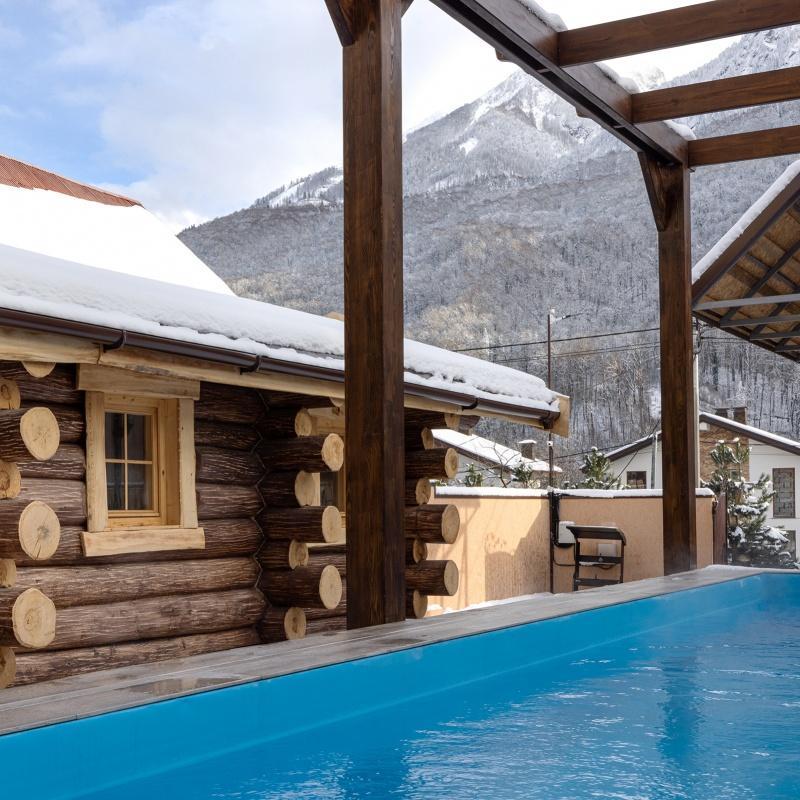
The main high-altitude impressions in Krasnaya Polyana are connected with going up towards the Aibga Ridge. Even if you do not ski, the cable cars here are a way to quickly get from the forest zone into a space with completely different light, air, and scale. Below you see the settlements and the road along the Mzymta; higher up there are already open slopes, crests, and long lines of ridges.
One of the clearest options is to go up to one of the viewing stations and allow at least half a day for the top. The weather below and above can differ sharply: in the village it is warm and calm, while at altitude there may be strong wind and a cloud that closes the panorama within a few minutes. So even in summer it is worth taking a light jacket.
If visibility is good, it is better not to rush back down. At altitude, the scale of the Western Caucasus becomes clear, and the relief can be read in layers: the forest belt, then subalpine meadows, higher up rocky sections and snow, which can remain longer than you expect. This is one of those cases when the sights of Krasnaya Polyana work not as a separate object, but as a whole system of views and elevation changes.
For those travelling in winter for the slopes, the article What is faster - skis or snowboard? may also be useful, but for a sightseeing trip the ascent into the mountains is interesting even without a sports programme.
Waterfalls and trails: Polikarya, Mendelikha Waterfall Park, and forest routes
When people ask what to see in Krasnaya Polyana besides the lifts, the first thing I recommend is the waterfalls. The best-known option is Polikarya Waterfall. It is high in the mountains, and people usually go to it as a separate route point after going up by cable car. It makes the strongest impression during active snowmelt and after wet weather, when the flow is fuller.
Another popular option is Mendelikha Waterfall Park on the southern slope of the Aibga Ridge. This is no longer a single point, but a network of trails and cascades where the walk takes several hours. Here it is important to assess your strength realistically: even if the route seems "excursion-like", your legs get tired quickly on descents and ascents, especially in the heat or after rain.
If you want a calmer walk, choose the forest eco-trails in the surroundings of the resort zone and the lower slopes. They are good because they give exactly that mountain-forest experience without a long hike out: damp air, beech and fir forest, streams, bridges, and shade even on a warm day. For a family with children, this is often a better choice than immediately setting off on a long route to the upper waterfalls.
On all trails, the main advice is simple: do not go in smooth city shoes. Roots, fine gravel, and wet boards after fog are common even on popular routes.
Viewpoints, Rosa Dolina, and walks above the forest zone
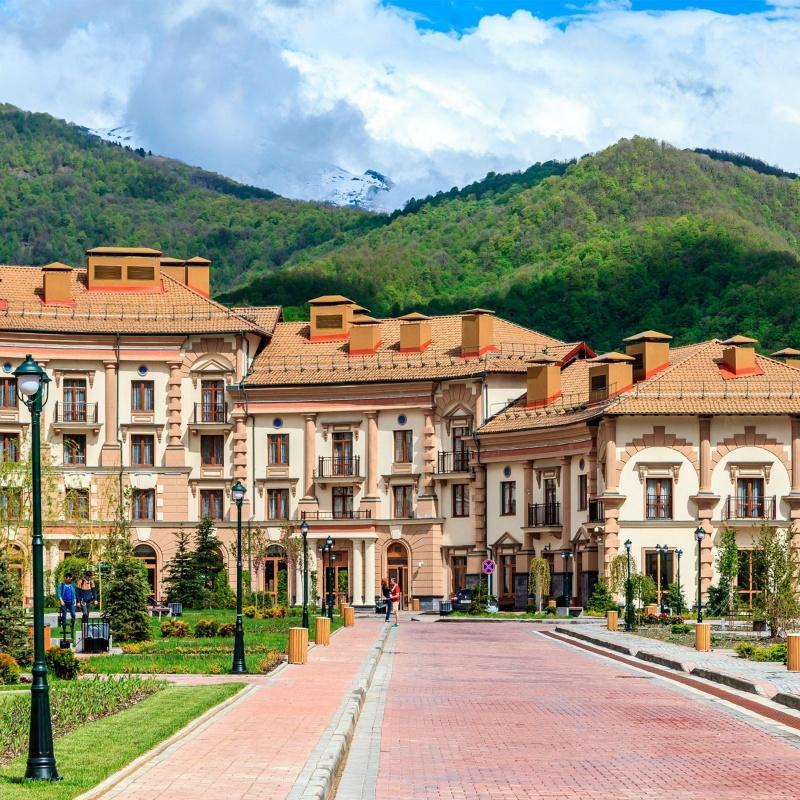
If you want to gather different impressions during the trip, include Rosa Dolina and the upper stations in the direction of Rosa Peak in your route. Below, this is a neatly organised space by the river, from where it is convenient to start ascents and walks. Above, the landscape has a completely different character: broad viewing platforms, open slopes, and the feeling that the sea has been left very far away, although in a straight line it is not really that far from the mountains.
At altitude, the contrasts of the terrain are clearly visible. Below there is dense forest; above there are meadows and open slopes, where the sun feels stronger than in the village. So in one day it is easy to get both coolness in the shade and a noticeable tan in the wind. I would definitely take sunglasses, sunscreen, and a supply of water, even if the route seems short.
If you have a choice between a large number of points and one long walk, it is better to choose the latter. In Krasnaya Polyana, what tires you is not the distance but the constant change in altitude and weather. One well-thought-out route through the upper platforms and trails is usually remembered better than an attempt to go around all the resorts in one day.
When to go, what to bring, and what budget to plan for
Krasnaya Polyana is good not only in winter. For walks, waterfalls, and viewpoints, late spring, summer, and early autumn are more convenient, when hiking routes are open and it is easier to spend the day at altitude. After heavy rain, it is better to keep plans flexible: visibility in the mountains changes quickly, and the trails become slippery.
It is worth taking with you:
- trainers or trekking shoes with grippy soles;
- a windbreaker or a light warm jacket for altitude;
- water and a small snack;
- a cap, sunglasses, and sunscreen;
- a rain poncho, if you are planning trails and waterfalls.
As for expenses, the rough guide is this: the main costs usually go on cable car ascents, food at the resorts, and transfers along the valley. If you plan without rushing and do not try to get into all the paid zones at once, a one-day outing comes out noticeably more manageable. For ascents and entrance to routes, it is reasonable to budget approximately from 1,500 to 4,000 RUB per person per day depending on the season and the programme chosen, plus food and travel along the valley.
The easiest way to get here is via Krasnaya Polyana from Sochi and Adler; the main air hub for the trip is Sochi International Airport (Adler). If you only have one day, it is better to limit yourself to one ascent and one short trail. If you have two or three days, you can already calmly divide up the settlements, altitude, and waterfalls.
Where to stay
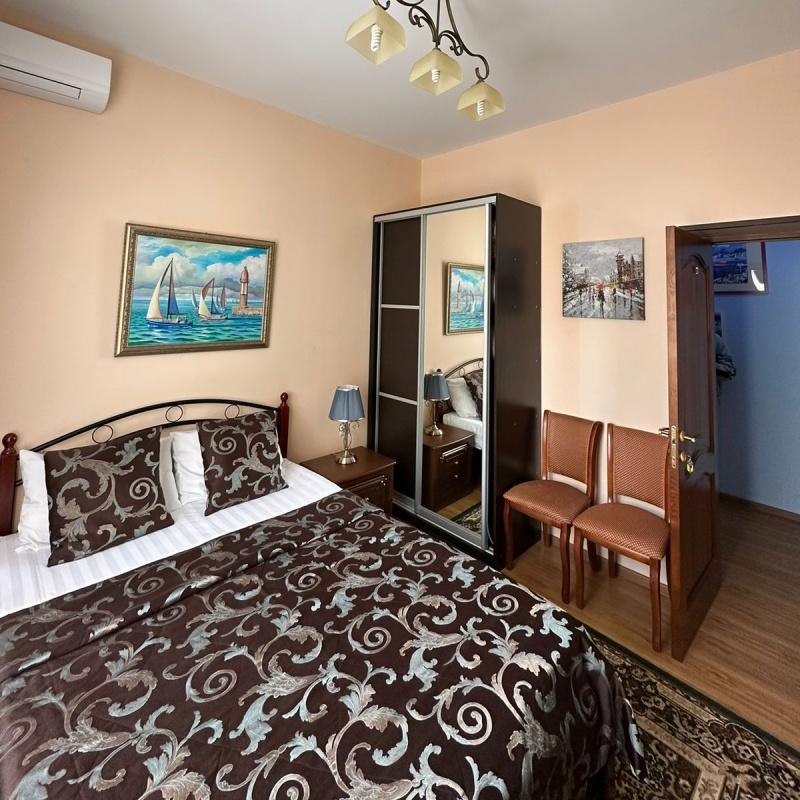
Art Kovcheg is an option in Krasnaya Polyana itself, about 1,190 metres from the centre. It suits those who want to walk around the village without extra transfers; amenities include a pool and wi-fi. Price from 3,900 RUB.
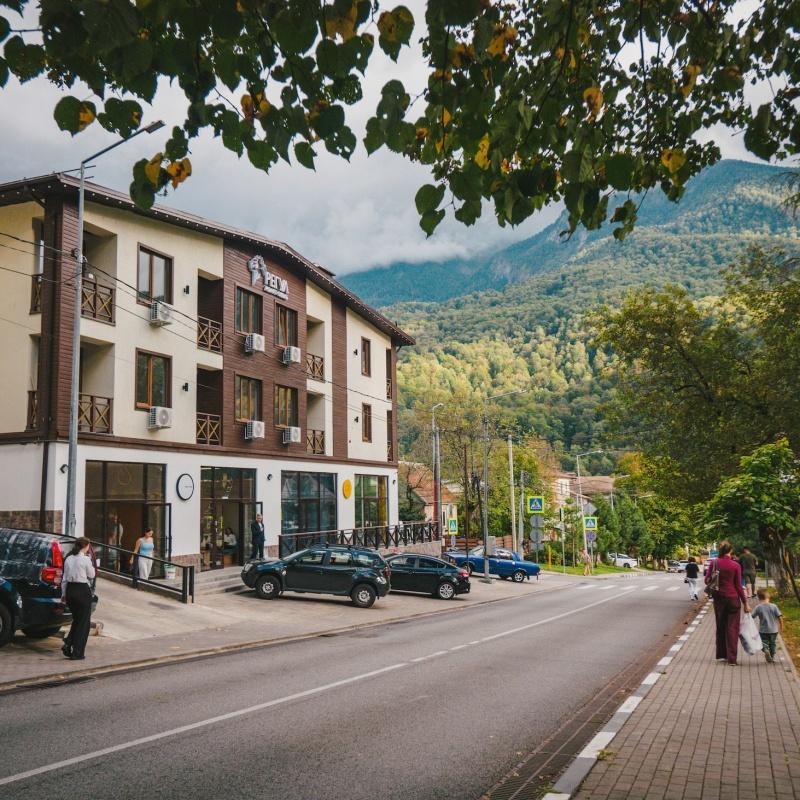
Regul is close to the village centre, about 220 metres away. It is convenient for a short trip focused on walks around Krasnaya Polyana and trips along the valley; there is free parking, a transfer service, a cafe, and wi-fi. Price from 4,480 RUB.
Solar Krasnaya Polyana by Stellar Hotels (formerly Solar Krasnaya Polyana) is an option with a pool and pet-friendly accommodation. It may be convenient for those who want to alternate mountain trips with quiet rest. Price from 2,571 RUB.
Ski Inn Rosa Khutor Spa Hotel is located in the resort zone, about 9,180 metres from the centre of Krasnaya Polyana. This is a good choice if lifts and walks along the upper routes are the priority; there is a pool, parking, a cafe, and wi-fi. Price from 5,000 RUB.
Apartment Complex (formerly Premium Gorky Gorod Apartments +540+960) will suit those who want to stay closer to the resort infrastructure and get around by car. There is free parking, a transfer service, and wi-fi. Price from 3,700 RUB.
Summary: how to put together a good route around Krasnaya Polyana
In short, the best answer to the question of what to see in Krasnaya Polyana sounds like this: first the Mzymta Valley itself and the settlements, then an ascent to altitude, then one nature route - to a waterfall or along an eco-trail. This way the place reveals itself gradually: from quiet streets and the river to ridges, panoramas, and high-mountain trails.
Do not try to fit everything into one day. In Krasnaya Polyana, what matters more is not the number of locations but the right rhythm: in the morning the village or Esto-Sadok, during the day altitude, and by evening an unhurried walk by the river. Then the beautiful places, the mountain views, and the very logic of this valley are remembered much better.
Frequently asked questions
For cable cars, waterfalls, and hiking routes, late spring, summer, and early autumn are more convenient. At this time it is easier to reach the high-mountain trails, but it is worth taking into account fog, heat on the open slopes, and slippery sections after rain.
For a first visit, 2-3 days are enough. One day can be devoted to the village of Krasnaya Polyana and Esto-Sadok, the second to ascents and viewpoints, and the third to waterfalls or forest trails.
You will definitely need comfortable shoes with good soles, a windbreaker or a light warm jumper, water, and sun protection. For routes to waterfalls, it is better to add a rain poncho and spare socks: moisture and mud on the trails are common here.
Short walks through the settlements, lower eco-trails, and viewpoints are accessible to most travellers. But routes to the waterfalls and walks above the forest zone already require stamina: there are ascents, descents, slippery sections, and a noticeable load on the knees.
If you do not include accommodation, the main expenses are cable cars, food, and local transport. For a sightseeing day with one ascent, it is reasonable to budget approximately from 1,500 to 4,000 RUB per person, and for a fuller day with several activities, more.