
Contents▾
- What to see in Nizhny Novgorod on the first day: the Kremlin, the stairs, and old streets
- The Strelka, the fair, and Alexander Nevsky Cathedral: the city’s second layer
- Where to go in Nizhny Novgorod for panoramas: the cable car, embankments, and slopes
- Interesting places in Nizhny Novgorod if you have a second day
- Practicalities: when to go, how to plan your route, and how much to budget
- Where to stay
- Conclusion
If you are deciding what to see in Nizhny Novgorod on a short trip, build your itinerary around two things: the high riverbank with panoramas of the Volga and Oka and the old city with its merchant streets. In 1-2 days you can walk through the Kremlin, go down to the water, see the Strelka, ride the cable car, and understand why Nizhny is perceived not as a set of postcards but as a city with a very varied rhythm.
What to see in Nizhny Novgorod on the first day: the Kremlin, the stairs, and old streets
The best way to start is with the upper part of the city. Nizhny Novgorod stands at the confluence of the Oka and the Volga, and its historic centre stretches along the high bank, so the strongest impressions here often come not from museums but from the terrain and the views. If you have arrived for the first time, set aside a long unhurried walking day.
Start with the Nizhny Novgorod Kremlin. This is the city’s main focal point: the fortress was founded as a frontier town in 1221, and inside the walls it is easy to understand the layout of the centre and map out the rest of your route. Even if you do not go into every exhibition, it is worth walking around the grounds, going out to the viewing platforms, and noticing how sharply the city drops towards the Volga. From the Kremlin, it is easy to walk to the Chkalov monument and immediately see the famous descent to the river.
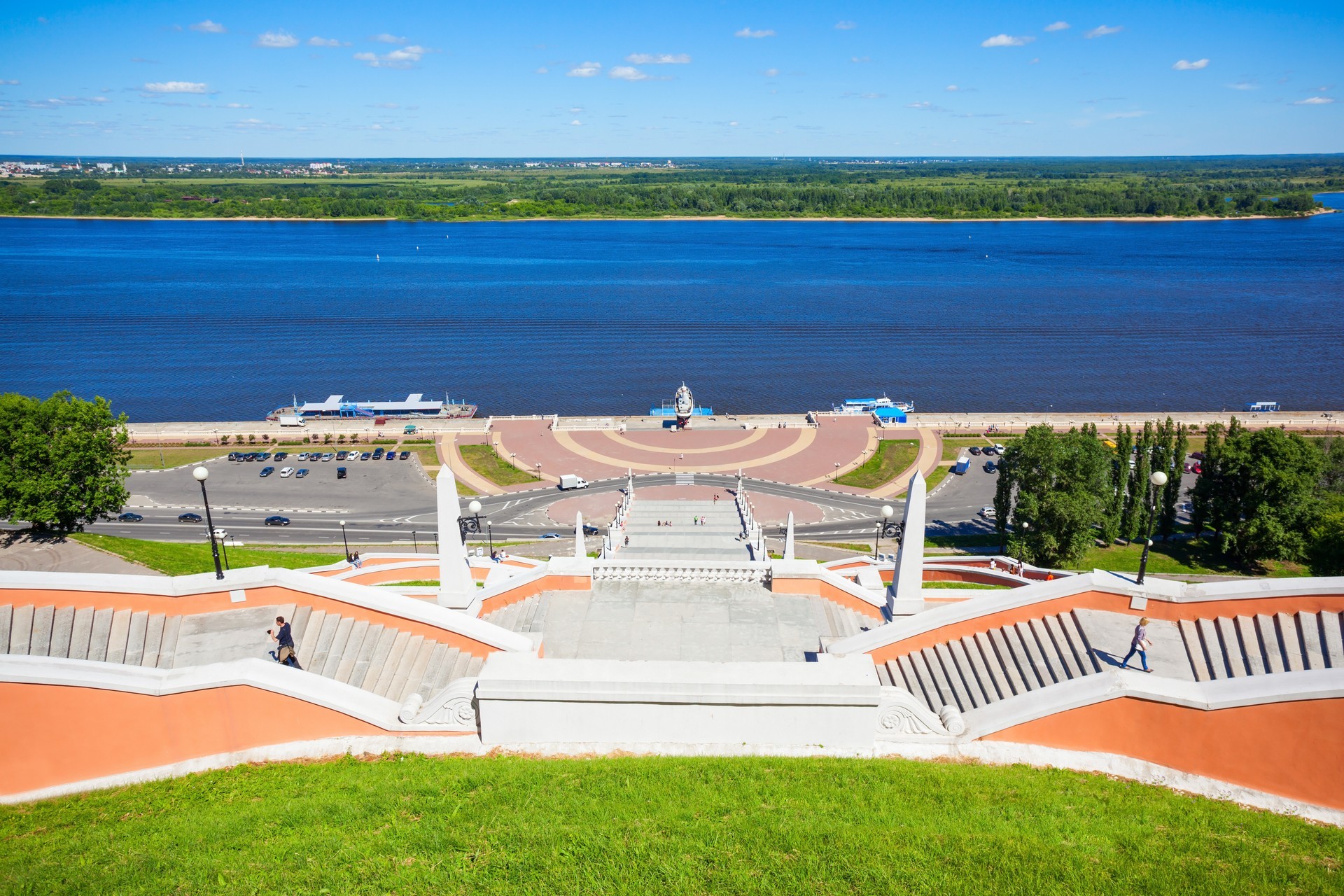
Next, the Chkalov Stairs. This is not just a ceremonial photo spot: from above, the wide Volga expanse is easy to take in, while below a different scale appears - water, boats, the embankment. If you do not want to get tired at the very start of the day, it is better to go down the stairs rather than climb them. From here, it is convenient to walk along the Upper Volga Embankment and turn back towards the centre.
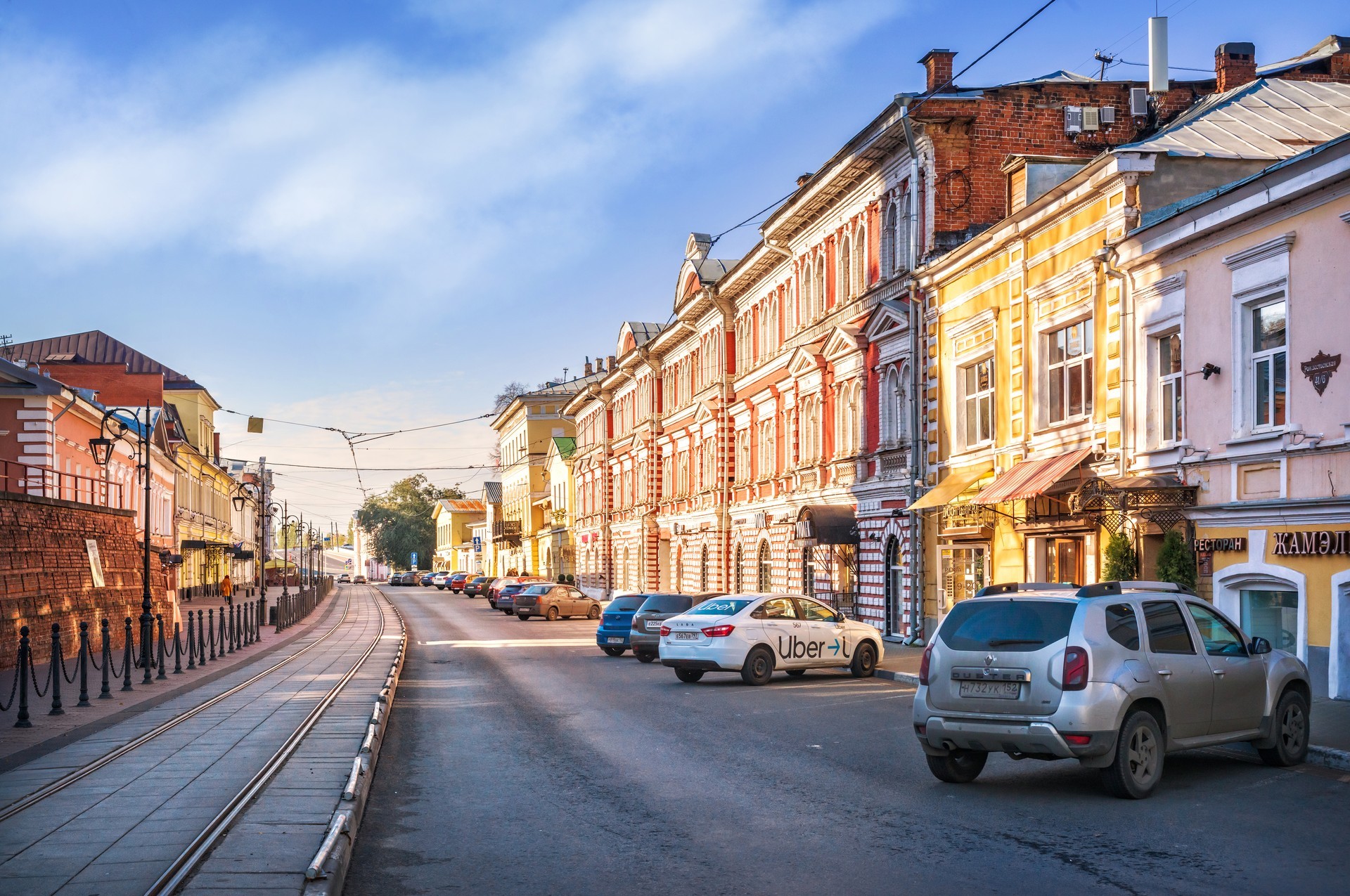
After the panoramic section, go to Bolshaya Pokrovskaya. This is the city’s main pedestrian street, but its character is lively and urban rather than museum-like: old facades, theatre buildings, cafes, street musicians. It is a good place to pause for lunch and then continue towards Minin and Pozharsky Square. If you want a less ceremonial atmosphere, add Rozhdestvenskaya Street - it lies lower in the terrain, closer to the old merchant Nizhny, with dense historic buildings and a completely different mood.
If you have time left, look at Nizhny Novgorod not only as a set of sights but also as a city of transitions between upper and lower levels: it is worth going down and back up several times to feel its logic. It is precisely in these changes of elevation that Nizhny is remembered most strongly.
The Strelka, the fair, and Alexander Nevsky Cathedral: the city’s second layer
In the second half of the first day or the following morning, head to where the Oka flows into the Volga. The Strelka is one of the city’s most expressive places: here it is especially clear how Nizhny is laid out and why its history is tied to trade and river routes. In clear weather, it is best to come either in the morning or closer to sunset: the light is softer, and the views of the upper bank are deeper.
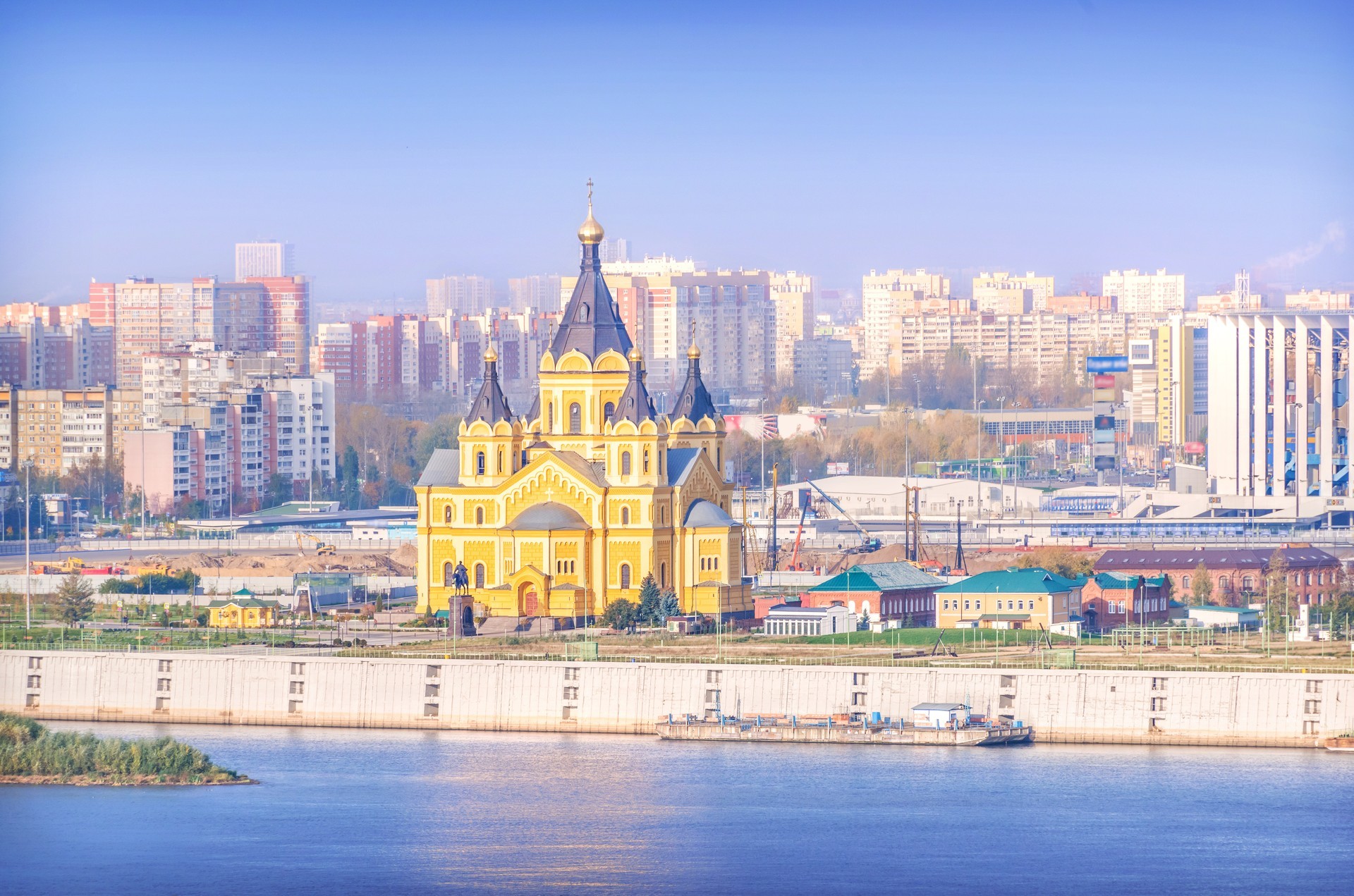
The main landmark is Alexander Nevsky Cathedral. It stands in an open space and is easy to spot from afar, especially from the water and from the city’s higher points. Nearby is the Nizhny Novgorod Fair district - a place without which it is hard to understand the city’s pre-revolutionary scale. Even if you are not planning a separate museum programme, simply walking through this part of Nizhny helps you see it not only as a fortress and merchant city, but also as a fair city.
This is a good place not to hurry and to look around: the broad spaces of the Strelka differ greatly from the tight streets of the centre. I would advise walking along the water and comparing the views of the Kremlin hill and the far distances beyond the Volga. This is one of those areas where the city changes especially strongly depending on the weather: on a windy day it becomes very spacious and severe, while on a calm day it is almost meditative.
If you like engineering and industrial themes, the Strelka is exactly where it is easiest to notice that Nizhny is not only an old centre but also a major river hub with a working side that is far from postcard-like. Because of this, a walk here balances the ceremonial route through the Kremlin and the embankments well.
Where to go in Nizhny Novgorod for panoramas: the cable car, embankments, and slopes
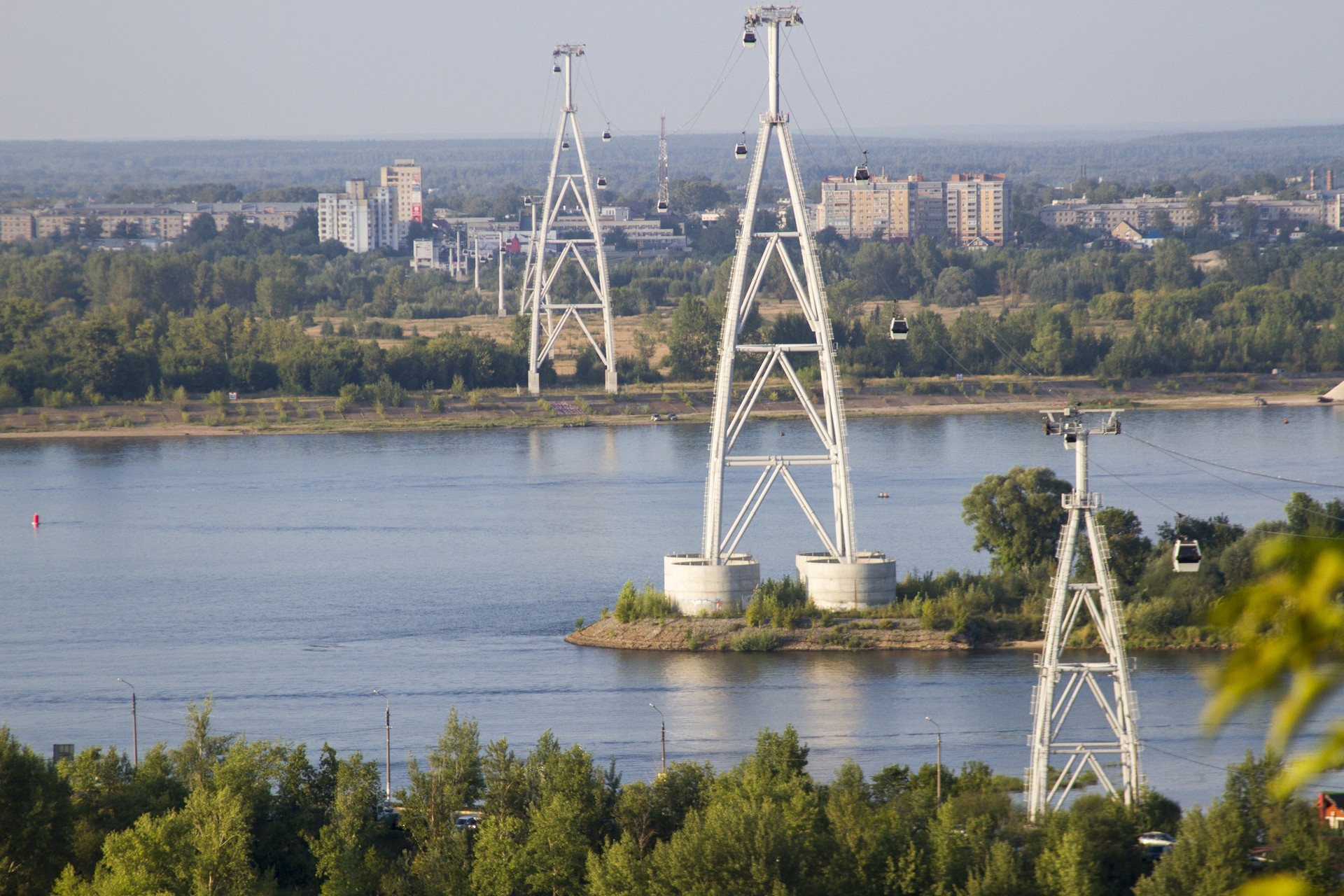
If views matter to you, add the Nizhny Novgorod cable car across the Volga to your route. For a short trip, this is one of the clearest ways to see the scale of the river and understand how the city is arranged in relation to Bor on the opposite bank. Even without any further programme on the other bank, the ride itself gives a strong visual experience: water, islands, the floodplain, the high bank, and dense urban development appear in a single frame.
After the cable car, it is convenient to return to the Upper Volga Embankment or walk sections along Georgievsky Descent and the neighbouring viewpoints by the Kremlin. These places are good because Nizhny opens up in layers: domes, walls, stairs, river expanses, and distant banks. If you like photographing cities, bring a wider lens and allow time for the light to change - the views here depend strongly on the hour of your walk.
Another good place for an unhurried walk is the Lower Volga Embankment. It does not replace the upper bank but complements it: from above, Nizhny looks composed and graphic; from below, more human, with movement by the water. If you walk without a rigid plan, you can link the Chkalov Stairs, the embankment, and the route back into the historic centre into one itinerary.
From experience: in the Volga wind it can feel cooler here than it seems in the centre. Even in the warm season, it is better to have a light windproof jacket with you, and in the shoulder seasons, shoes that do not slip on stairs and cobblestones.
Interesting places in Nizhny Novgorod if you have a second day
Once the essential programme is done, the most interesting part of Nizhny begins. On the second day, I would choose one of two scenarios: either go deeper into the historic streets and museums, or see the city parks and calmer districts.
Among city walks, it is worth adding Rozhdestvenskaya Street if you only passed through it quickly on the first day. Here the old trading Nizhny is easier to notice: the street stretches along the lower part of the centre and lets you feel that the city lived not only on the hills but also by the water. Nearby, it makes sense to look for the River Station and exits to the embankment.
If you want a museum component, look at the manor-house and literary addresses in the centre, and then head towards Zapochainye and Ilyinskaya Street. This is not the most ceremonial route, but it shows a quieter, hillier Nizhny with churches, descents, and houses where the city can be read without the tourist showcase.
For a break from the centre, Switzerland Park and walks along the Oka slope are good options. The park stretches along the high bank of the Oka and works not as a point but as a long walking corridor with river views. If you have already had your fill of the Volga, this is exactly where you can switch to another side of the city - less ceremonial and more everyday.
Another option is to go up to the viewing platforms at different times of day and compare the city in the morning and towards evening. Nizhny is one of those places where a second look does not feel repetitive: at the Strelka, by the Kremlin, and on the Volga bank, not only the light changes, but the very feeling of space as well.
Practicalities: when to go, how to plan your route, and how much to budget
For a first trip, the easiest time to come is the warm dry season, when you walk a lot between the upper and lower city. But the shoulder seasons are interesting here too: there is less crowding in the streets, the terrain is easier to appreciate, although the embankments and stairs require attention. The route is possible in winter as well, but then it is worth reducing the number of long walks and making more frequent stops indoors.
For one day, I would put together the following route: Minin and Pozharsky Square - Nizhny Novgorod Kremlin - Chkalov Stairs - Lower Volga Embankment - lunch - Bolshaya Pokrovskaya - Rozhdestvenskaya Street. For two days, add the Strelka, Alexander Nevsky Cathedral, the Nizhny Novgorod Fair district, the cable car, and Switzerland Park.
Useful things to take with you:
- comfortable shoes for stairs, cobblestones, and long walks;
- a windproof jacket or a light extra layer for the embankments and viewpoints;
- water, if you are planning to walk a lot along the upper bank;
- a power bank, if you plan to photograph the views and use a map.
For expenses, think in terms of a normal city weekend: the main walks in the centre require almost no spending, while transport, coffee breaks, the cable car, and museums add to the budget as you choose. For local travel and several paid stops, it is reasonable to allow approximately from 1,000 to 3,000 RUB per person per day, excluding travel to the city and accommodation. If you want to choose an area for your route in advance, it is useful to look at the article Where to stay in Nizhny Novgorod: the best areas for tourists and how to choose accommodation.
Where to stay
If you want to stay closer to walks in the centre, look for options within a short distance of the centre. For a 1-2 day trip, this saves a noticeable amount of energy.
- Rest Home - a hotel 250 m from the centre, with prices from 1,200 RUB. It will suit those who plan to walk a lot; amenities include free parking and Wi-Fi.
- Tari - a hotel 1010 m from the centre, with prices from 2,500 RUB. A convenient option if you need a compromise between proximity to the historic quarters and calm logistics.
- Tikhiy Dvorik - a hotel 3270 m from the centre, with prices from 2,600 RUB. It will suit those who plan to get around by taxi or public transport and return to a quieter area.
- Beketoff - a hotel 3990 m from the centre, with prices from 2,800 RUB. It can be considered for a trip by car or if price matters more than walking distance to the main walking routes.
Conclusion
The main sights of Nizhny Novgorod are best seen not as a list but as a connected route: the Kremlin, the Chkalov Stairs, the Upper and Lower Volga Embankments, Bolshaya Pokrovskaya, Rozhdestvenskaya, the Strelka, Alexander Nevsky Cathedral, and the cable car come together into a very coherent impression. The city works well even for one day, but it truly opens up over two: then there is time not only to cover the essential points but also to catch its relief, the wind from the Volga, and the transitions between different parts of Nizhny.
Frequently asked questions
For a first acquaintance, 1-2 days are enough. One day will go to the Kremlin, the stairs, the embankments, and the central streets, and the second to the Strelka, the cable car, the fair district, and calmer walks.
The most convenient time is warm dry weather, when it is comfortable to walk a lot and go down to the embankments. In the shoulder seasons there are fewer people, but the slopes and stairs can be slippery and windy.
From Strigino Airport, people usually get to the centre by taxi or by public transport with a transfer into the city. If you have a short 1-2 day trip and an early arrival, a taxi often saves noticeably more time.
Yes, the historic centre and the main viewpoint spots combine conveniently into one long walking route. But you need to keep in mind the changes in elevation, the stairs, and the large distances between the city’s upper and lower levels.
The main thing is comfortable shoes, because the route will almost certainly include cobblestones, stairs, and long descents. A windproof jacket, water, and a power bank are also useful, especially if you plan to walk for a long time along the embankments and viewpoints.