
Contents▾
- Zelenogradsk sights: where to start your walk
- First-day itinerary: Kurortny Prospekt, old villas, and the water tower
- The sea, the promenade, and the pier: where to go in Zelenogradsk by the water
- Second day: the town park, the Curonian Spit, and the surrounding area
- Practicalities: when to go, what to bring, and how much to allow
- Where to stay
- Summary: what to see in Zelenogradsk in 1-2 days
The sights of Zelenogradsk are easy to explore on foot: the town stands on the Baltic Sea, at the base of the Curonian Spit, and almost the whole route fits into an unhurried walk at a relaxed pace. If you are deciding what to see in Zelenogradsk over a weekend, start with the old streets and the promenade, and leave the sea, the park, and a trip to the spit for the second day.
Zelenogradsk sights: where to start your walk
Zelenogradsk is the former Cranz, an old Prussian resort on the Amber Coast of the Baltic Sea. The town has a pace that is unusual for the coast: it does not sprawl for kilometres, but comes together in a clear walking route - the station, old streets, the water tower, the promenade, the pier, and the way out to the park. That is exactly why it works well for a 1-2 day trip: there is no need to spend time on long transfers, yet the change of impressions is still noticeable.
If you walk without museums and long stops, the first loop around the centre will take about half a day. I would advise against starting with the beach: it is better to go through the historic part first, while your fresh eye still catches the details - tiled roofs, carved balconies, old villas, and sanatorium buildings. For general orientation, it is convenient to open the page for Zelenogradsk and then put together a route on the spot to match your pace.
First-day itinerary: Kurortny Prospekt, old villas, and the water tower
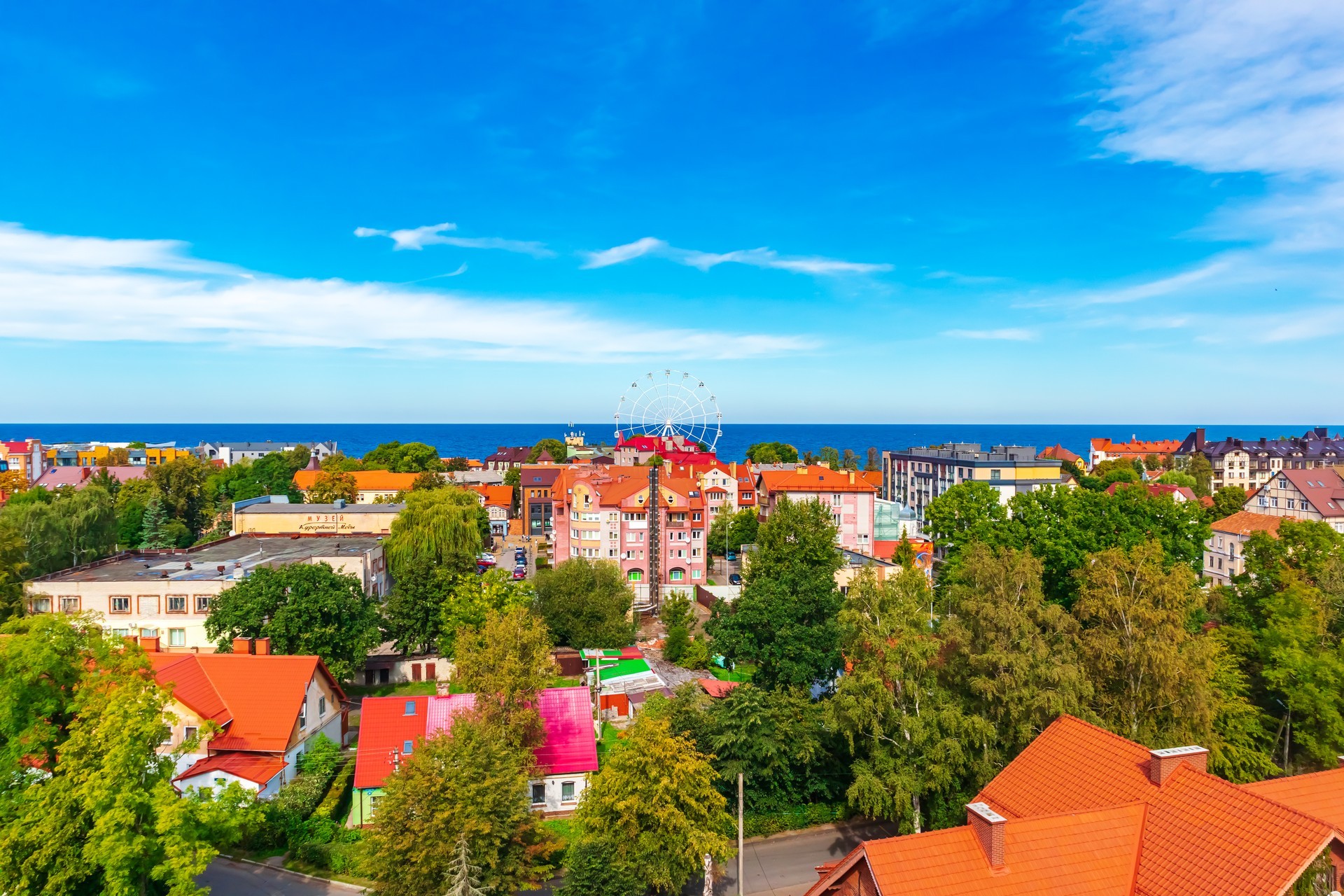
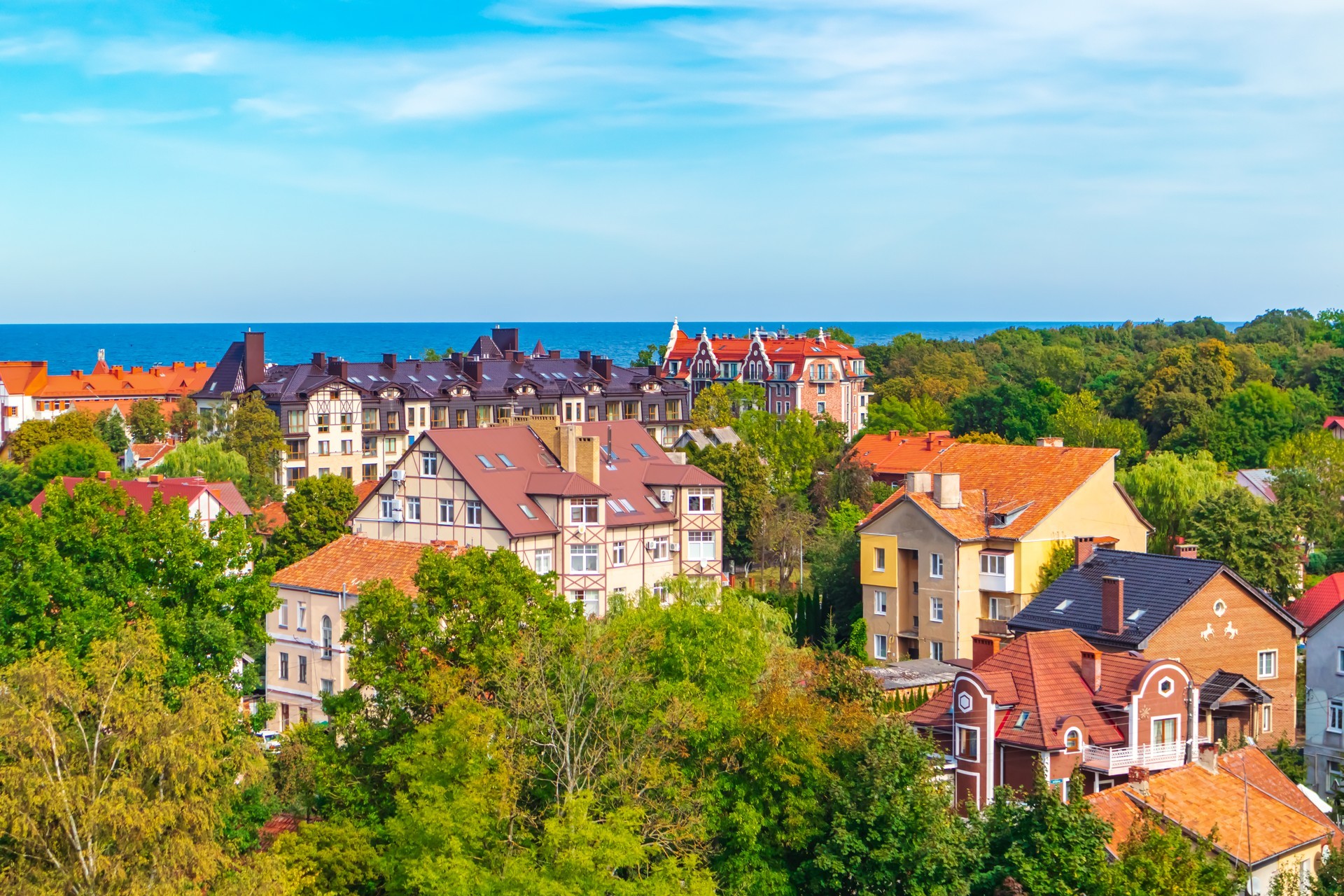
The town's main walking axis is Kurortny Prospekt. This is not a grand avenue in the capital-city sense, but a cosy street in a resort town where it is best not to hurry and to look around. Buildings from the late 19th and early 20th centuries have been preserved here, and they are exactly what gives Zelenogradsk its character: low-rise development, attic floors, bay windows, and decorative facades. The street is especially good in the morning and toward evening, when there are fewer people and the town's texture itself is more noticeable.
From here it is easy to turn toward the Transfiguration Cathedral. The building is notable because it is the former St Adalbert's Church, and the town's European history is clearly legible in its silhouette. Even if you do not go inside, it is worth walking around the church: nearby it is especially noticeable how resort-town lightness and the old Prussian street plan come together in Zelenogradsk.
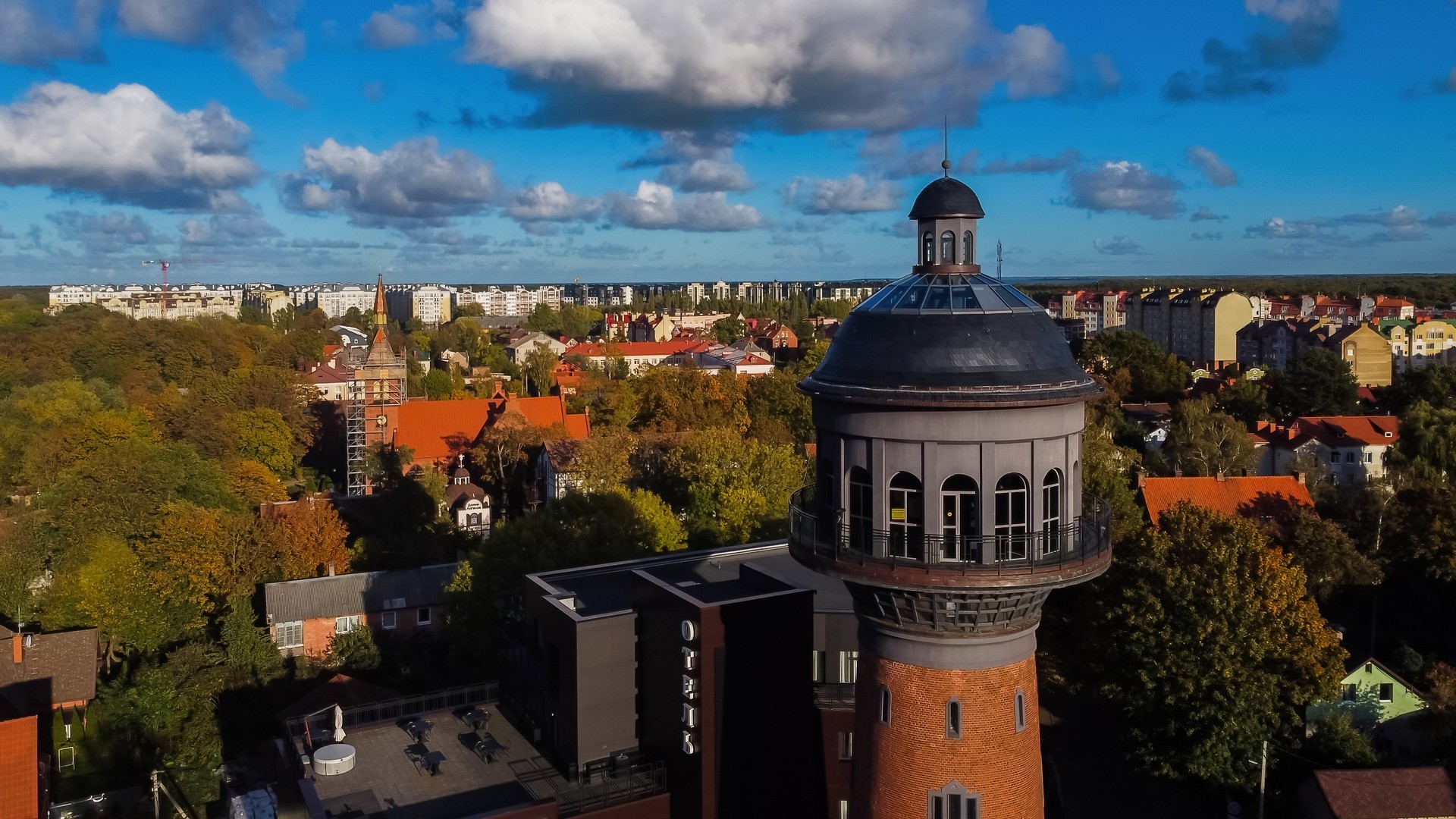
The next essential stop is the Cranz water tower. It is one of the town's most recognisable landmarks and the best way to quickly understand how the centre is laid out: from above you can see the roofs of the old part, the sea, and the line of the promenade. The tower is usually left for the middle of the walk: by then you already know the streets from below, and from the observation deck everything comes together into a single picture.
If you have time left, drop into the local history museum and the quiet streets around the centre, where the old resort villas are seen best of all. It is here that it becomes clearest what to do in Zelenogradsk apart from the sea: not just tick off a set of points, but catch the atmosphere of an old Baltic resort.
The sea, the promenade, and the pier: where to go in Zelenogradsk by the water
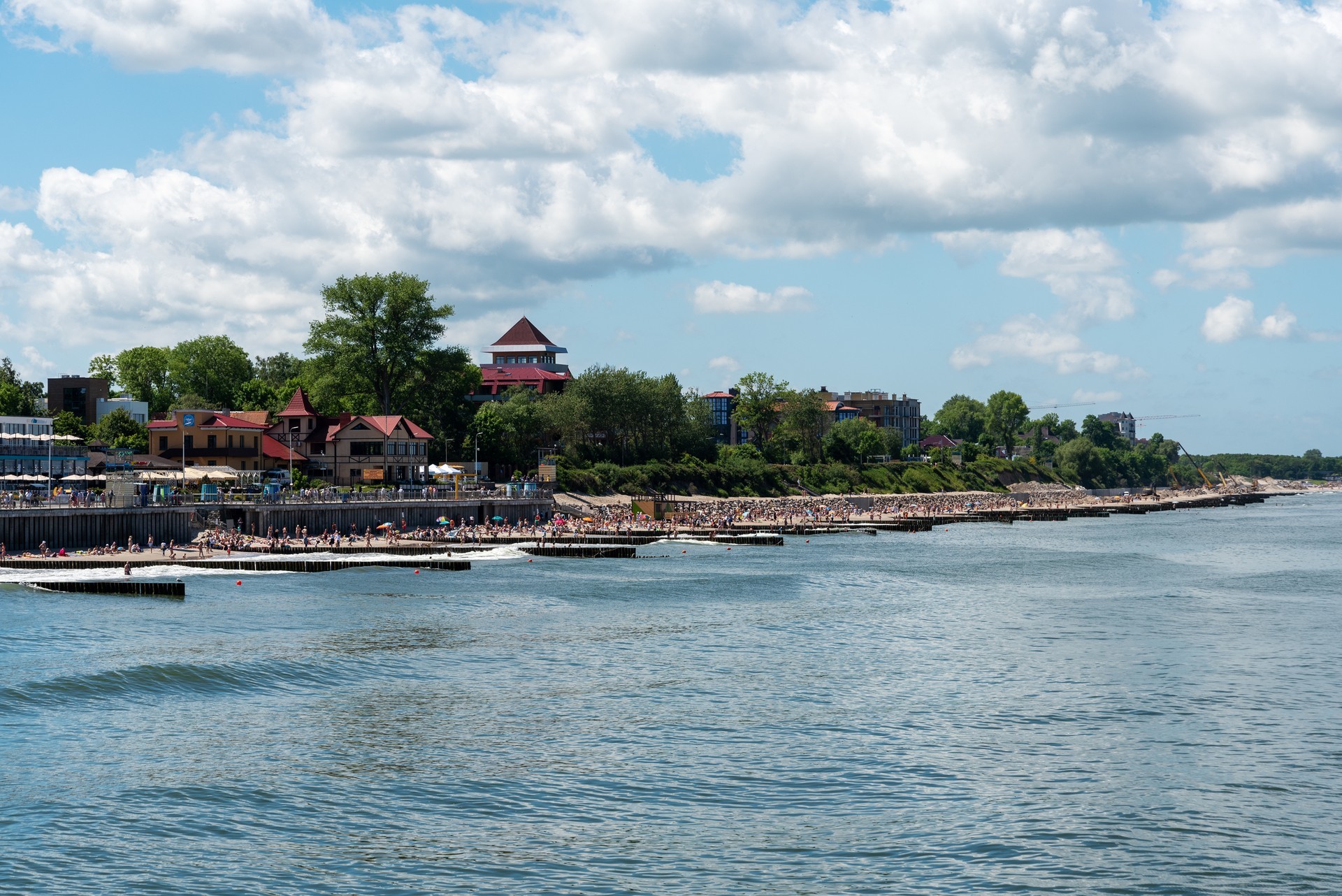
After the historic centre, it is logical to head out to the Baltic Sea. The promenade in Zelenogradsk is long and open to the wind, and that is its main character: even on a warm day it is easy to overestimate the weather here. Bring a windbreaker, because by the water the temperature feels different than it does on the streets deeper in town.
The route is simple: reach the sea, walk along the embankment in both directions, and make sure to go out to the pier. From there it is especially easy to see how the town stands at the meeting point of the beach and the old buildings, and it is also the most convenient place to watch the sunset line of the shore. If the sea is rough, people do not linger here for long - the wind on the pier can be sharp.
On the way, notice the town details that keep the walk from turning into an ordinary "promenade along the sea": a mineral-water pump room, small squares, staircases with access down to the beach, and old buildings on the seafront. In the warm season people come here for the beach, but if your goal is interesting places in Zelenogradsk, it is better to think of the embankment as part of the route rather than the final point.
If you want a calmer stretch, head toward the western part of the shore, where the flow of people is usually lighter. For photographs, midday works less well than morning or the light before sunset: then the sea and facades look softer, and there is less random bustle on the promenade itself.
Second day: the town park, the Curonian Spit, and the surrounding area
On the second day, I would not focus only on the centre. First, walk into Zelenogradsk town park - it is a convenient transition from resort streets to a calmer pace. It is a good place to take a break from the promenade: more shade, less wind, and a different scale of walk. If you have come with children or simply want an unhurried pace, the park is a successful part of the route between the sea and a trip out of town.
The main outing from Zelenogradsk is to the Curonian Spit. The town stands at its base, and that is exactly why many people use it as the starting point for a short trip. Even if you have little time, the road itself already changes the impression: the dense urban setting quickly gives way to dunes, pine forest, and long stretches of shoreline.
On the spit, people usually choose one or two points rather than trying to see everything at once. The most straightforward for a first visit are the Dancing Forest and Efa Height. The Dancing Forest is known for its twisted pine trunks, while Efa Height is a dune area with viewing boardwalks and open views over the sandy relief, the Baltic Sea, and the Curonian Lagoon. It is best to walk here in comfortable shoes and not step off the boardwalks: the dunes are sensitive to impact, and wind and sand quickly erode the slope.
If you want not only nature but also a human scale, you can drive to the settlements of Rybachy or Lesnoy. These are good points for seeing the spit not as a postcard but as an inhabited place with an ordinary rhythm of life. This kind of second day is especially good for those deciding where to go in Zelenogradsk and nearby so as not to limit themselves only to the embankment.
Practicalities: when to go, what to bring, and how much to allow
The best time for walks in Zelenogradsk is late spring, summer, and early autumn. In summer it is easier to combine a route around town with the beach, but there are also noticeably more people. If you want to look at the architecture, walk along the promenade, and go to the Curonian Spit without dense crowds, May, June, and September are especially pleasant.
What to bring with you:
- a windbreaker or light jacket - by the sea it is almost always noticeably cooler than the forecast suggests;
- comfortable shoes for cobblestones, stairs, and walking on the boardwalks on the spit;
- sunglasses and water for a long walk along the embankment;
- a small backpack instead of a heavy bag if you are planning to spend the second day out of town.
The budget for an independent trip without accommodation depends on the season and the programme, but for a walking day in town a moderate sum for food, coffee, a museum, and transport is usually enough. If you add a trip to the Curonian Spit, people usually allow a separate amount for the road, the eco-fee, and a snack. In bad weather the route still works, but it is better to shorten your time by the water and focus on the museum, the tower, the old streets, and cafes in the centre.
As for what I would avoid: do not leave the whole route until the middle of the day in the hot season, and do not assume that it will be windless by the sea. Another common mistake is trying to combine the whole centre, the beach, and the entire Curonian Spit in one day. For a relaxed trip, it is better to divide the town and the spit into at least two separate blocks.
Where to stay
If you want to stay closer to the centre and the main walking route, look at options in the urban part of Zelenogradsk.
- Eliza BonApart - an aparthotel, about 410 m from the centre, prices from 4,400 RUB. Suitable for those who want quick access both to the old streets and to the sea.
- Apartments on Sadovaya Street - from 2,500 RUB, about 400 m to the sea and 850 m to the centre. A convenient option for a short trip with walks on foot.
- Lermontovsky Apart - from 4,190 RUB, about 1,080 m to the centre. Suitable for those arriving by car: there is free parking.
- Park House on Moskovskaya - a hotel with prices from 5,000 RUB, about 1,540 m to the centre. Convenient if you want a calmer pace and parking.
Summary: what to see in Zelenogradsk in 1-2 days
If you have one day, it is enough for a good walking route: Kurortny Prospekt, old villas, the Transfiguration Cathedral, the water tower, the promenade, and the pier. If you have a second day, add the town park and a trip to the Curonian Spit with one or two points such as the Dancing Forest and Efa Height.
Zelenogradsk is good because it does not require complicated logistics or long distances. This is a town where it is better not to chase the number of locations: here the strongest impressions often come not from headline sights but from the combination of old streets, sea wind, sand, pines, and the calm Baltic pace.
Frequently asked questions
One full day is usually enough for the town itself: the centre is compact, and the main points are linked by a walking route. If you want to add the Curonian Spit without rushing, it is better to allow two days.
Late spring, summer, and early autumn are especially convenient for walks around town. In summer it is easier to combine the centre with the sea, while in May, June, and September it is usually more comfortable for walking and the flow on the embankment is less dense.
A windbreaker, comfortable shoes, and a small supply of water will definitely come in handy. Even on a warm day there can be a sharp wind by the sea, and on the spit some routes run along boardwalks and open sections.
No, the route is simple and suitable for an ordinary walk without special preparation. The exertion is moderate: people get tired most often not because of the terrain, but because of the long walk along the embankment and additional trips out of town.
If you walk around town independently, the budget is usually made up of food, coffee, town transport, and tickets to individual sights. If you go to the Curonian Spit, it is worth additionally allowing money for the road, the eco-fee, and a snack.
The nearest airport is Khrabrovo in Kaliningrad. From there, people usually continue to Zelenogradsk by suburban train, bus, taxi, or car; the town itself is best explored on foot.