
Contents▾
- What to consider the centre of Pyatigorsk
- Hotels in central Pyatigorsk: which landmarks matter more than streets
- Where to walk if you stay in the central area
- What to see near the centre besides the main streets
- How to choose an area in the centre to match your travel pace
- Where to stay
- Summary: where to stay in central Pyatigorsk so the city opens up
If you are looking for hotels in central Pyatigorsk, it helps to understand the city first: where the resort area ends, where it is easier to walk to Tsvetnik, how close you are to climbing Mashuk, and which streets are best for walking. The centre here is defined not by a formal point on the map, but by a chain of landmarks — parks, drinking galleries, historic quarters and access points to terrenkurs.
What to consider the centre of Pyatigorsk
In Pyatigorsk, the centre is not limited to a single square. For a walking-focused trip, it usually means the area around Tsvetnik Park, Lermontov Gallery, the old resort streets and the foot of Mashuk. It is here that it is easiest to feel that Pyatigorsk is not just a city, but a resort of the Caucasian Mineral Waters: drinking routes run between the historic buildings, mountain paths begin nearby, and in half an hour on foot you can move from urban development to a wooded slope.
If you are coming for walking and the atmosphere of an old resort, it is better to stay in quarters from which you can easily walk to Tsvetnik without transport. If your priority is quiet and access by car, streets a little farther from the walking core but with an easy route into the centre will suit you. This is especially important in Pyatigorsk: the terrain is uneven, and a distance of 1 km on the map may feel longer if you are walking uphill.
Hotels in central Pyatigorsk: which landmarks matter more than streets
When choosing hotels in central Pyatigorsk, it is more practical to look at landmarks than administrative boundaries. The first is Tsvetnik Park, the city's oldest resort walking area. From here it is close to Lermontov Gallery, an ornate pavilion from the early 20th century that is easy to recognise by its glass-and-metal facade. Nearby is Diana's Grotto, an artificial cave in the resort area that people usually visit while walking between the main alleys.
The second landmark is Mount Mashuk. Pyatigorsk lies at its foot, and it is from the central quarters that it is easiest to reach the walking trails. Even if you are not planning a long climb, the view of the slope itself helps you understand the city: the historic part seems pressed against the mountain, while the streets spread out from the resort core into more ordinary residential quarters.
The third landmark is the places associated with Lermontov. The M. Yu. Lermontov House Museum is worth seeking out if you like urban routes with short walks between stops. Slightly farther away, on the slope of Mashuk, is the site of Lermontov's duel — it is more convenient to plan this as a separate walk or a short ride. If your aim is not only to stay overnight but also to walk around the city without relying constantly on taxis, choose an area from which these places connect into a single walking route.
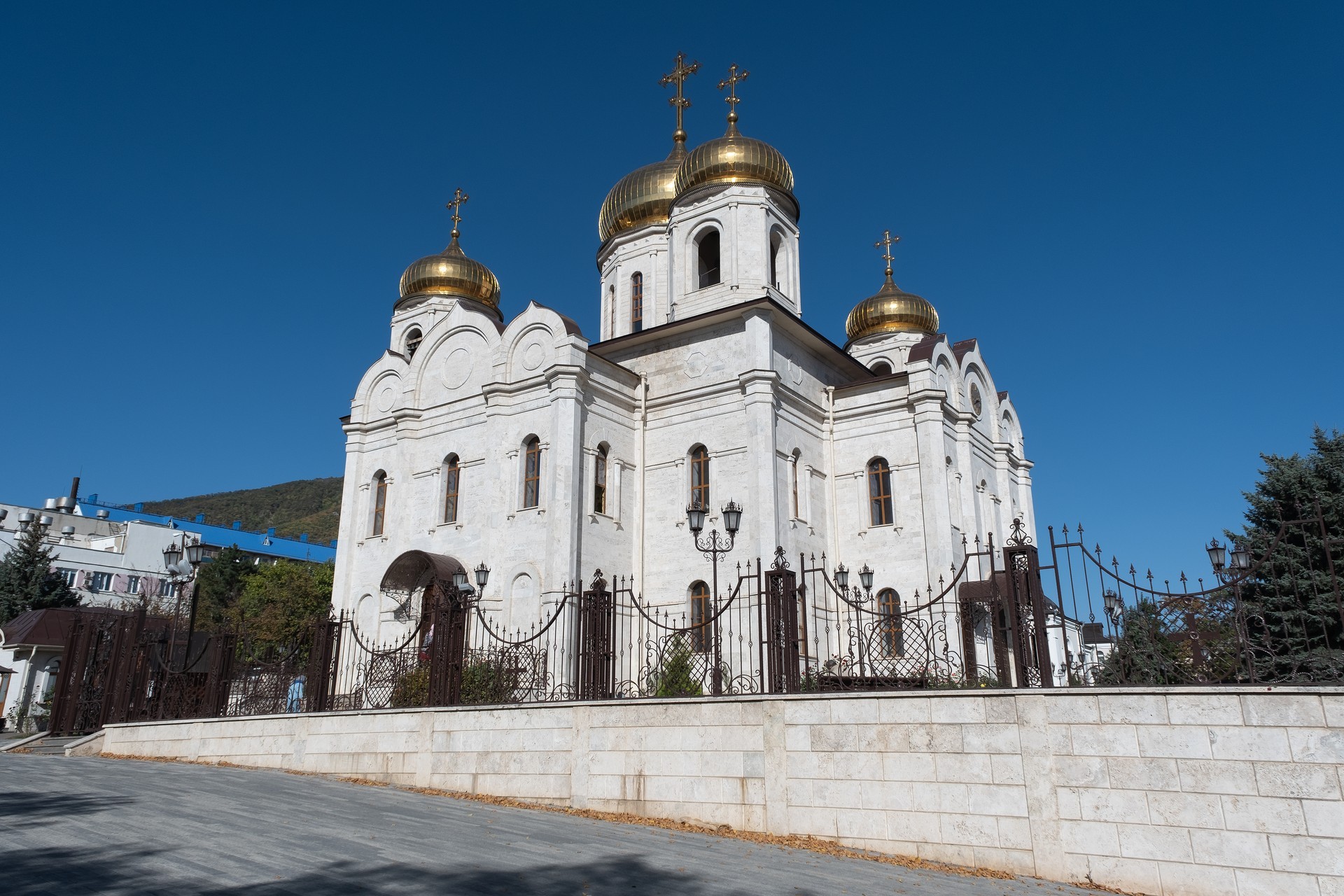
Where to walk if you stay in the central area
The clearest route for the first day is to start at Tsvetnik, walk to Lermontov Gallery, then go up to Emanuel Park and after that decide according to your energy: either continue toward Mashuk or return to the historic quarters. Pyatigorsk's strength lies precisely in these half-day walks, when there is no need to go anywhere in particular.
If you want panoramas, it is worth going up Mashuk. At the top there is a view of the city and the neighbouring mountains of the Caucasian Mineral Waters; in clear weather the panorama here is much better than below, among the quarters. You can make the ascent on foot along the paths or choose a gentler option if you do not want to spend too much energy on the first day.
For a calm city walk without climbing, the area around Academic Gallery is a good choice. This is one of Pyatigorsk's recognisable resort buildings, and around it you can clearly see how the city's healing history, walking architecture and natural terrain coexist. If you like not only views but also details, allow time for the facades of old buildings, staircases, retaining walls and paths between the pump rooms: the centre of Pyatigorsk reveals itself better slowly than in a rush between sights.
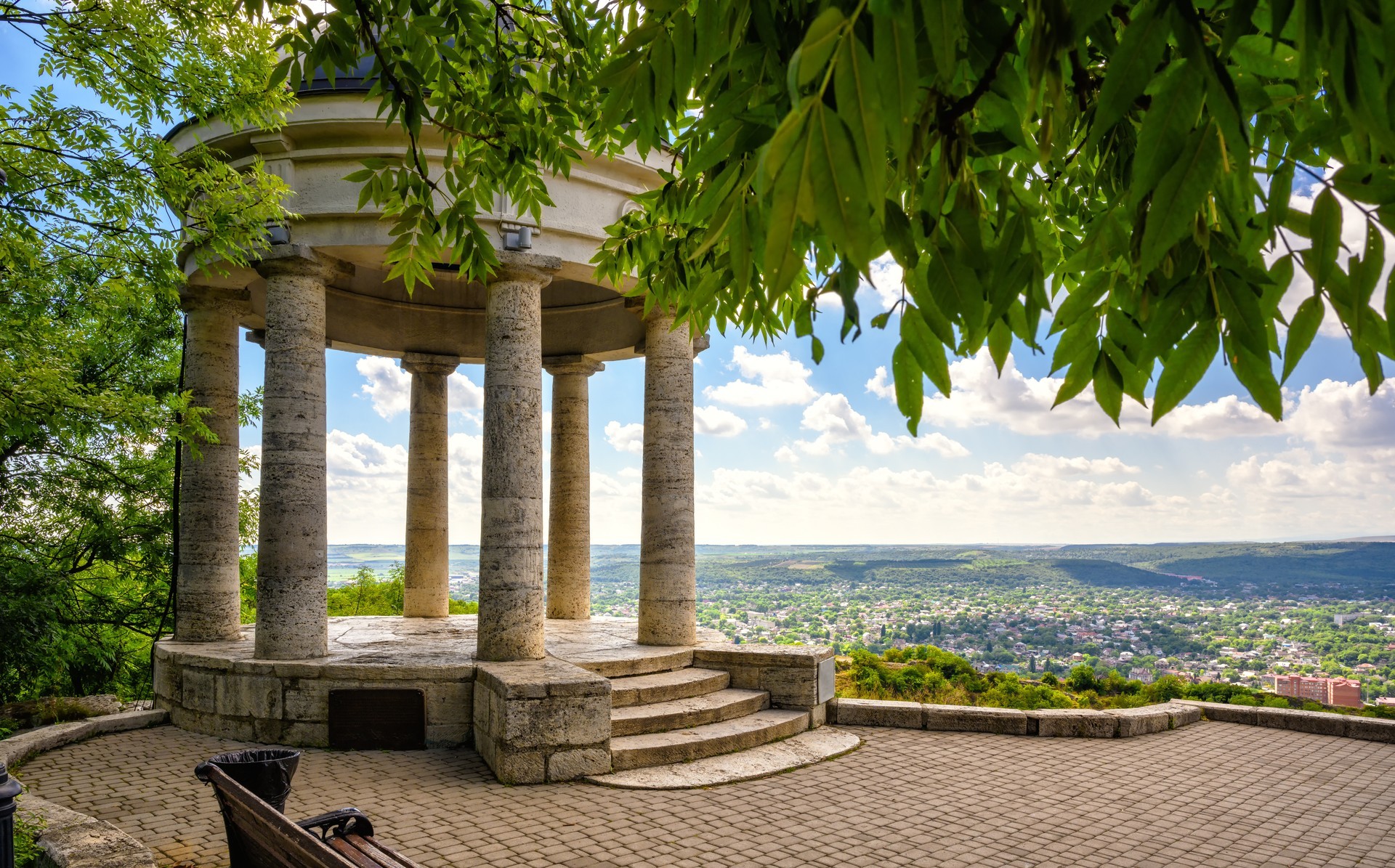
What to see near the centre besides the main streets
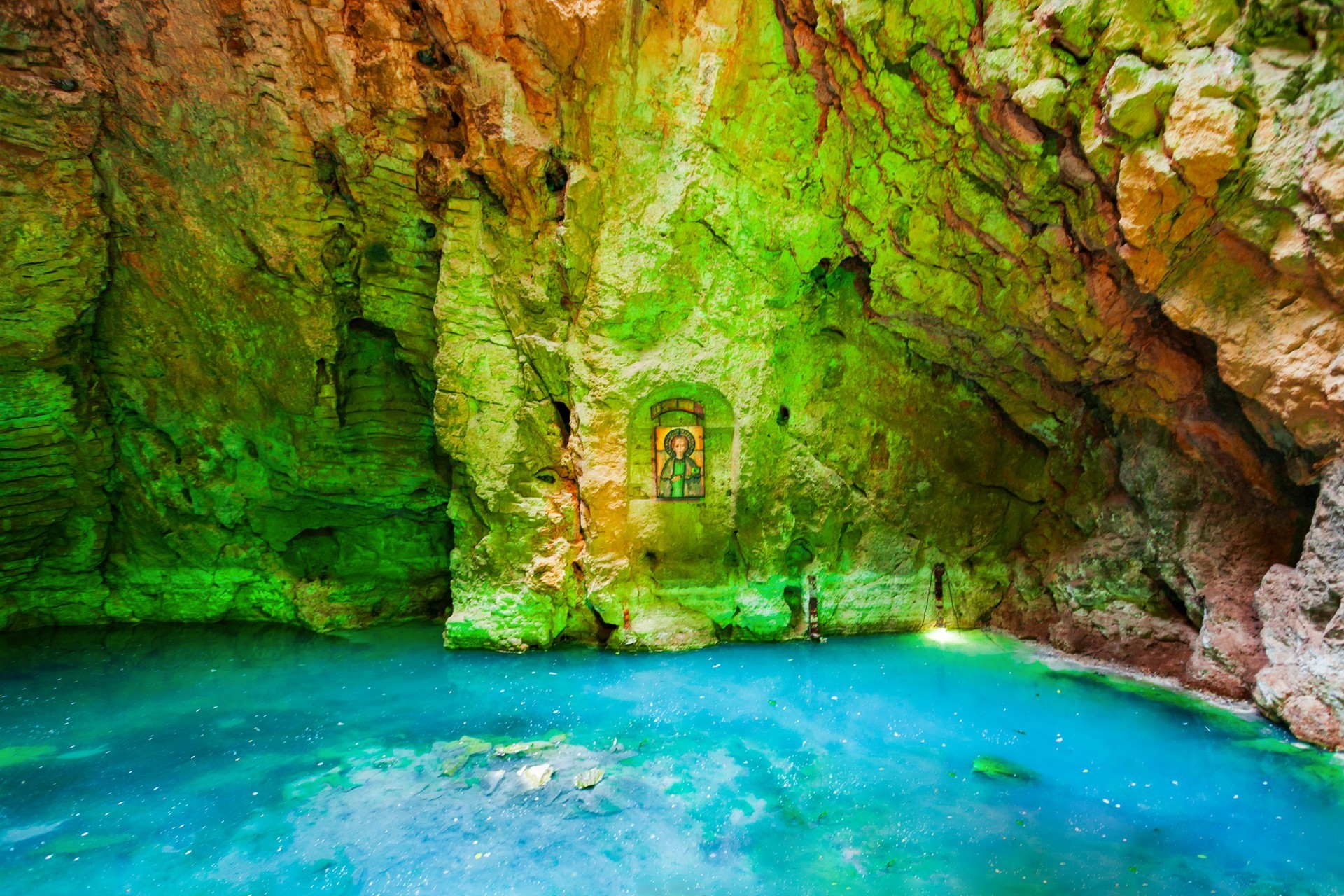
Pyatigorsk is convenient because beyond the centre itself, places for longer outings begin quickly. Proval is one of the city's most famous natural sights: a karst sinkhole with an underground lake on the slope of Mashuk. Even if the place seems too popular, it is still worth coming at least for the approach through the resort area itself and the view of the slopes.
If you want to continue with Lermontov-related places, after the central quarters it makes sense to go to the site of Lermontov's duel. This gives a different feeling of Pyatigorsk: less urban stage-setting, more air, forest and open space. And if you like scenic trips around the area, it is worth leaving time for neighbouring Zheleznovodsk with its Resort Park, or for Kislovodsk with its large national park and terrenkurs. These towns do not replace Pyatigorsk, but complement it well: in Pyatigorsk the historic resort environment is stronger, in Kislovodsk there are longer park walks, and in Zheleznovodsk there is a more intimate atmosphere and a calmer pace.
If you are travelling by car, you can plan a short circular route around the Caucasian Mineral Waters and return to Pyatigorsk by evening. But for a first trip, I would not overload the programme: the central part of Pyatigorsk and Mashuk easily fill two full days, especially if you walk and do not skip the museums.
How to choose an area in the centre to match your travel pace
For a first trip, the most convenient choice is the quarters within walking distance of Tsvetnik and the old resort area. This is the option for those who want to step straight out for a walk in the morning, visit a museum or gallery during the day, and not think about transport in the evening. This kind of accommodation has one nuance: in season, the walking streets are livelier and busier with people than the more distant quarters.
If your priority is access by car, a quick drive out for errands or a quieter evening, look at areas that are formally no longer right in the centre but still remain at a reasonable distance. In Pyatigorsk, the difference between 600 metres and 2–3 km is noticeable: on foot, it means a completely different plan for the day. So it is useful to answer honestly in advance whether you are ready to walk over hills, or whether it is better to allow for short taxi rides.
For a busy weekend without a car, I would choose a place closer to the walking core. For a longer trip with outings to Essentuki, Zheleznovodsk or Kislovodsk, accommodation a little farther from the centre will also work if quiet, parking and a spacious room matter more than being within a short walk of the resort avenues.
Where to stay
Svoi — apartments about 630 m from the centre. Suitable for those who want to stay closer to the walking area while choosing an apartment format. Amenities include wi-fi, free parking and a transfer. Price — from 2,990 RUB.
Dallas — a hotel about 910 m from the centre. A convenient option if you need a compromise between proximity to the central streets and a quieter location. There is wi-fi and free parking. Price — from 5,100 RUB.
Golden Complex — a hotel about 1,020 m from the centre. A good choice for those planning to do a lot of walking, but who do not aim to stay in the busiest walking hub itself. There is wi-fi and free parking. Price — from 2,600 RUB.
Evraziya — a hotel about 2,310 m from the centre. Suitable for those who are ready to reach the resort area by transport and want to focus more on overall logistics around the city. Wi-fi is listed among the amenities. Price — from 3,500 RUB.
Old Town Apart-Hotel — a hotel about 2,840 m from the centre. An option for a trip by car or for those who are not tied to daily walks to Tsvetnik. There is wi-fi and free parking. Price — from 4,000 RUB.
Summary: where to stay in central Pyatigorsk so the city opens up
In Pyatigorsk, it is better to choose not an abstract "centre" but your own trip scenario. If walks, old resort streets, climbs up Mashuk and the ability to turn off at any moment to galleries and museums matter to you, stay closer to Tsvetnik and the historic core. If you want a calmer pace with trips around the Caucasian Mineral Waters, you can stay a little farther away and use the centre as a point of attraction for half a day or an evening.
Pyatigorsk is good because it is easy here to alternate city and nature: walk along resort avenues in the morning, climb to viewpoints in the daytime, and return to the old quarters in the evening. That is why a well-chosen area feels not like a formality, but like half the impression of the trip.
Frequently asked questions
The most comfortable time is during the warm months and in early autumn, when it is pleasant to spend a long time walking in the resort area and climbing the paths of Mashuk. In winter the centre is also accessible, but the slopes and stairs may be slippery, and some walks take place within shorter daylight hours.
For the centre itself, Tsvetnik, the Lermontov-related places and a walk on Mashuk, it is reasonable to allow 2–3 days. If you want to add neighbouring towns of the Caucasian Mineral Waters, it is better to plan 4–5 days without rushing.
You need comfortable shoes with a proper sole: there are many climbs, stairs and uneven paths in the centre. Water, a light windbreaker and a small backpack are useful, especially if you plan to go to Proval or climb Mashuk.
You can walk around the historic centre and resort area without special preparation if you are comfortable with climbs. The most noticeable challenge is the terrain: even short routes here sometimes turn out to be more tiring than you would expect from the map.
Speaking roughly, for a city weekend without longer outings you should allow a budget for food, taxis when needed, and museum tickets — usually this means several thousand RUB on top of accommodation. Excursions around the city and the surrounding area are also best counted approximately, since the format and programme noticeably affect the price.