
Contents▾
- Where to stay in Kazan if you came to explore on foot
- Historic quarters and quiet streets: where to stay in Kazan without the bustle
- Modern Kazan by the water: the area of the Chasha, the Kazanka, and long walks
- Where to go from your chosen area: the Kremlin, Kaban, Sviyazhsk, and Raifa Monastery
- How to choose an area for your travel scenario
- Where to stay
- Summary
The question of where to stay in Kazan is easier to answer not by the metro map or by a beautiful view from the window, but by your plan for the day. The city has a compact centre by the Kazan Kremlin, walking areas along the Kazanka and the Volga, quiet quarters near Sukonnaya Sloboda, and modern districts on the opposite bank — and each travel scenario has its own advantages.
Where to stay in Kazan if you came to explore on foot
If the goal of your trip is to walk through the main sights without long journeys, look at the area around the Kazan Kremlin, Bauman Street, Kremlyovskaya Street, and the Kazanka embankment. This is exactly where the city is felt most strongly, at the meeting point of the old merchant centre, university Kazan, and a great Volga city.
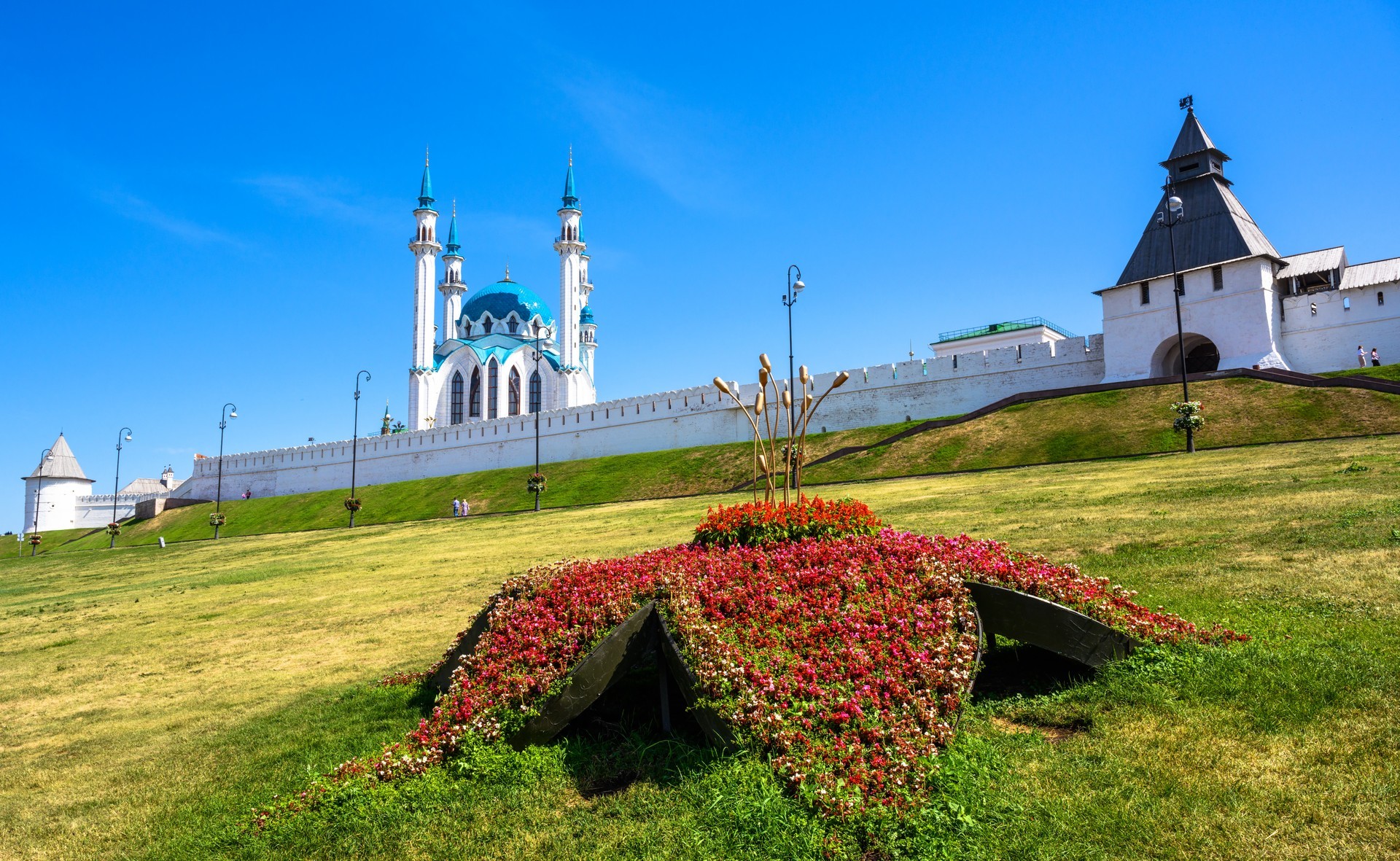
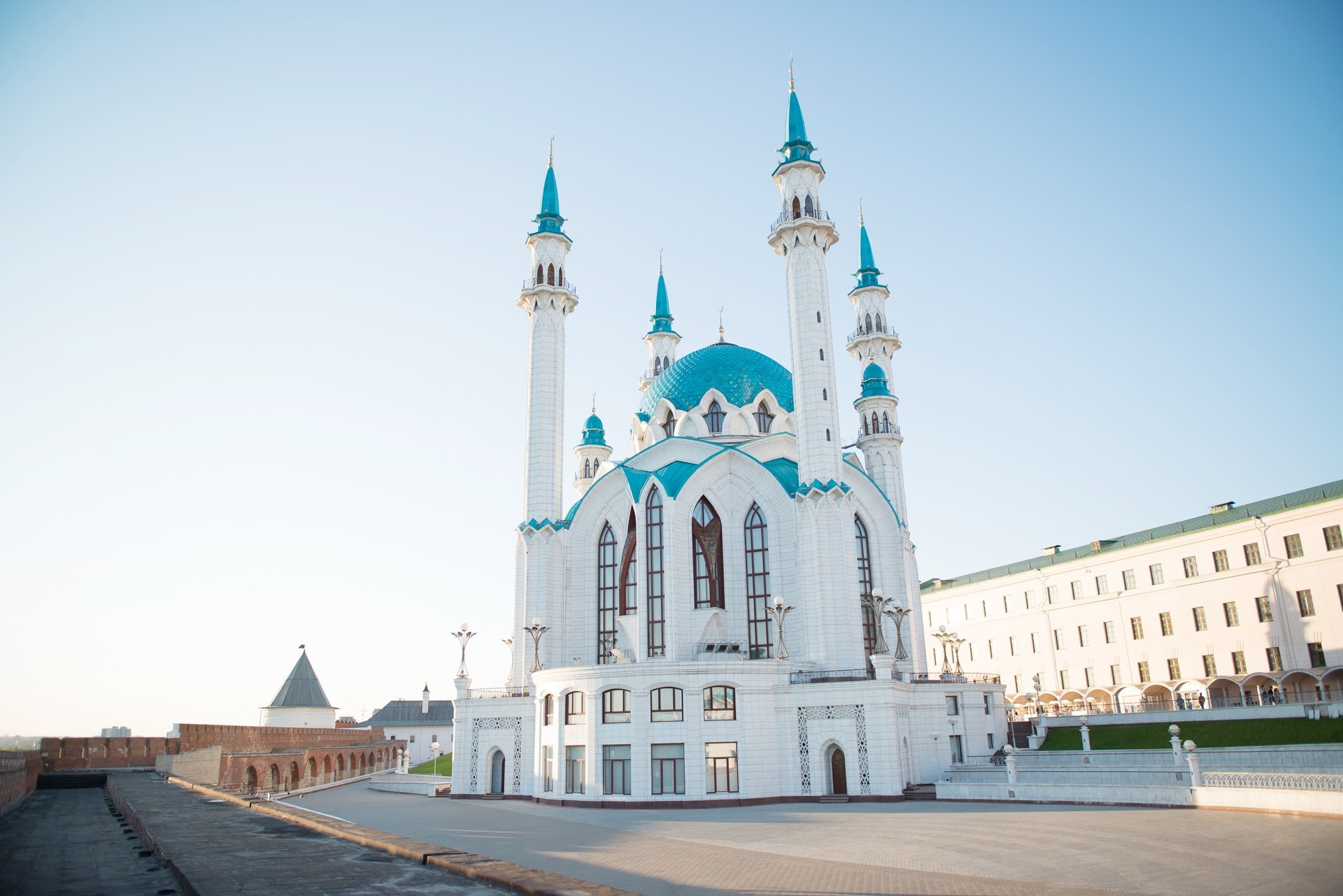
The Kazan Kremlin stands on high ground at the confluence of the Kazanka and the Volga. Inside, it is easy to combine several places in one walk: the Kul-Sharif Mosque, the Annunciation Cathedral, the Syuyumbike Tower, and the river viewpoints. This is a good area for a first trip if you want to head out in the morning and immediately find yourself in the city’s historic part.
From the Kremlin, it is easy to walk to Bauman Street — the pedestrian axis of the centre, where it is convenient to arrange meetings and make short stops between museums. Nearby is the National Museum of the Republic of Tatarstan, and a little farther along Kremlyovskaya Street is the university quarter. If you like cities that reveal themselves on foot, central Kazan works exactly like that: little time is spent on logistics, and a lot on façade details, courtyards, and viewpoints.
For evening walks, it is convenient to head from here to Dvortsovaya Embankment and farther to the bank of the Kazanka. And if you want to add a river theme to your route, you can look at the article 🚢 Volga Cruise in advance: Kazan fits well into Volga routes both in atmosphere and geography.
Historic quarters and quiet streets: where to stay in Kazan without the bustle
If the centre matters to you but you do not want to stay right by the main pedestrian street, look at the quarters away from Bauman Street — in the direction of Sukonnaya Sloboda, Dostoevsky Street, Gorky Street, and the Old Tatar part of the city. This is no longer a postcard view, but a calmer Kazan, where it is easy to alternate between walks and rest.
Sukonnaya Sloboda is a good compromise between quiet and easy access to the centre. From here it is convenient to walk to Lake Kaban, one of the city’s most recognisable landscapes. The lake embankment is suitable for a long evening walk: there are fewer tourists here than by the Kremlin, and the city rhythm is easier to see without the ceremonial façade.
It is also worth taking a closer look at Old Tatar Sloboda. This is one of the areas where the city’s Tatar layer is especially visible: low-rise buildings, mosques, houses with wooden and stone details, and quiet streets by the water. It makes sense to plan a walk here with a stop at the Chak-Chak Museum or at one of the small tea houses, where you can slowly try echpochmak, gubadiya, and tea with local sweets.
If you are choosing which area to stay in in Kazan for two or three unhurried days, the combination of “Sukonnaya Sloboda — Kaban — Old Tatar Sloboda” is often more convenient than accommodation on the busiest tourist axis itself. During the day, it is easy to walk to the centre from here, and in the evening the area remains calmer.
Modern Kazan by the water: the area of the Chasha, the Kazanka, and long walks
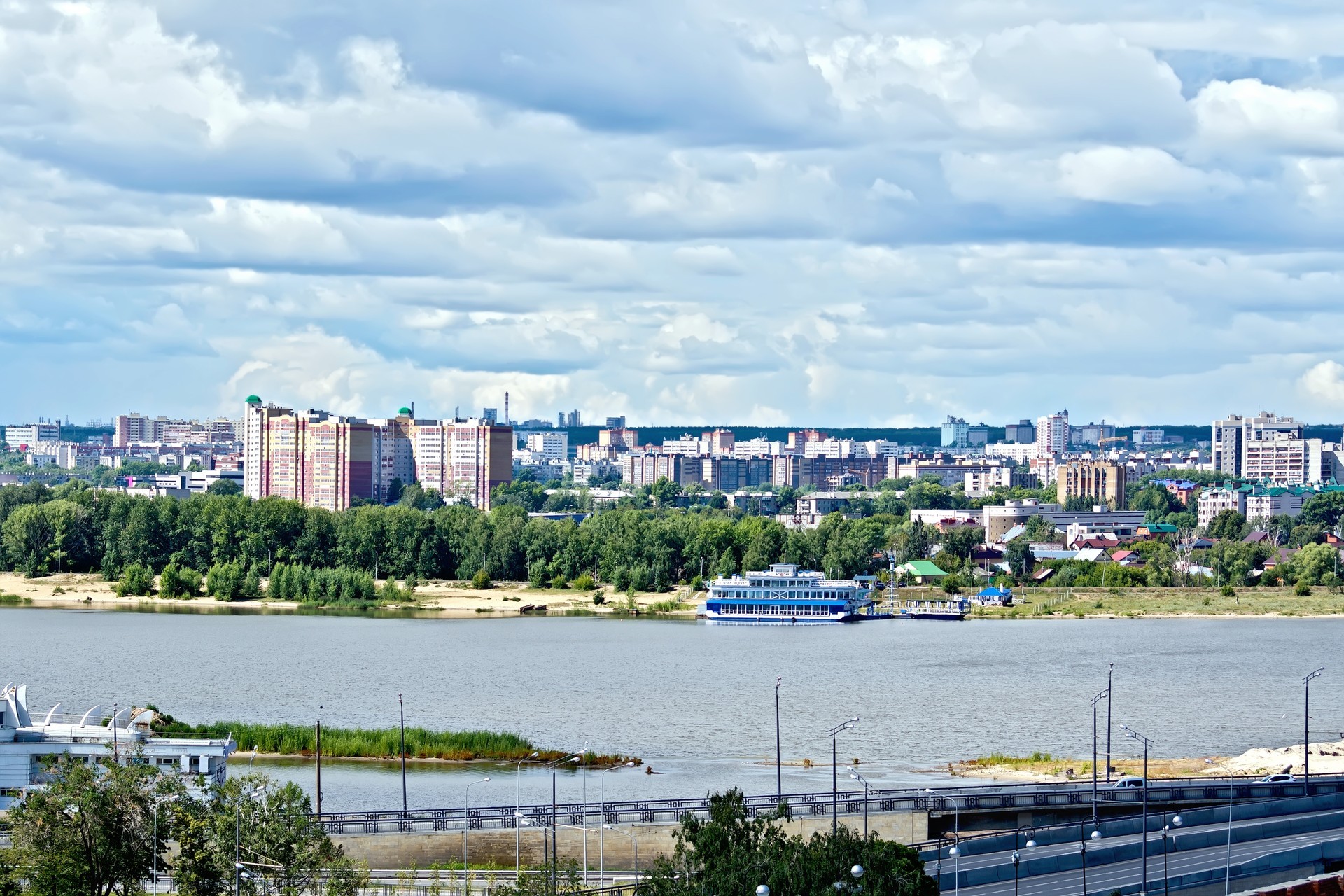
Those who like wide-open spaces, modern embankments, and evening views usually enjoy the area by the Kazan Family Centre, which in the city is more often called the Chasha. It stands on the bank of the Kazanka opposite the historic centre, and it is from here that one of the most complete views opens up over the Kremlin and the line of the old city.
This bank is convenient for those who are ready to use taxis or transport a little more, but want to stay in a more spacious urban setting. It is good here for morning runs, evening walks along the river, and watching how the panorama changes at different times of day. The area is especially rewarding in clear weather, when the white walls of the Kremlin and the waters of the Kazanka work as a single landscape.
On the way, you can include a walk to the Kremlyovskaya Dam and then return toward the centre. If you want greenery, add Chernoye Ozero Park in the historic part of the city and Gorky Park to your route — this is already a different type of urban relaxation, with alleys and a calm pace. This scenario suits those who are not in Kazan for the first time or simply like staying not in the very heart of the sights, but near water and panoramic views.
Before booking, it is useful to open Kazan on a district map and check how much time the journey will take not only to the Kremlin, but also to the places you will go to in the morning and in the evening. In Kazan, the overall impression depends greatly on how often you cross the river and how much walking you are ready to do.
Where to go from your chosen area: the Kremlin, Kaban, Sviyazhsk, and Raifa Monastery
Choosing an area in Kazan is easier if you understand in advance what exactly you want to see besides the basic central sights. For a short trip, the usual essential set is the Kazan Kremlin, Bauman Street, Lake Kaban, Old Tatar Sloboda, and the Kazanka embankment. But if you have one more day, the city is worth seeing more broadly.
The first direction is the island-town of Sviyazhsk. This is not a district of Kazan, but a separate trip, though a very revealing one for the entire Volga region: monastic ensembles, a high riverbank, and the feeling of an isolated place on the water. People usually go there for half a day or a full day, and in that case it is more convenient to stay closer to the way out of the centre rather than deep inside the pedestrian quarters.
The second direction is the Raifa Mother of God Monastery and the surroundings of the Volga-Kama Nature Reserve. A trip here has a completely different character: less city noise, more forest, water, and monastic quiet. If you like alternating a city weekend with one countryside stop, this route balances out a dense programme of museums and embankments well.
In Kazan itself, do not miss the Hermitage-Kazan Centre in the Kremlin and the Kazan Kremlin Museum-Reserve as a unified complex, and for an unhurried walk, Lyadskoy Garden and Millennium Park. These are not the loudest points in guidebooks, but they are exactly what help you understand which area of Kazan is best for you personally: ceremonial, quiet, university-style, or modern by the water.
How to choose an area for your travel scenario
If you are in Kazan for the first time, choose the centre within walking distance of the Kremlin or Bauman Street. This saves energy: in the morning you can walk one way toward museums, in the afternoon turn toward Kaban, and in the evening return along the embankment. This option is especially convenient for 2–3 days.
If you are travelling by car, it is more useful to look not only at proximity to the sights, but also at how easy it is to leave the centre. Historic quarters are beautiful, but parking and traffic density can be more difficult there. In that case, it is calmer to stay on the edge of the central area or in districts with more direct access to major streets.
If cafes, walks, and evening city lights matter to you, choose the centre or the area by the Chasha. If you want a slower pace, Sukonnaya Sloboda and the streets around Kaban usually prove more comfortable. And if Sviyazhsk, Raifa, or long trips around Tatarstan are in your plans, it is better not to confine yourself to the most pedestrian core.
Among the things that are especially useful in Kazan are comfortable shoes, light protection from the wind by the water, and a small reserve of time for walking routes. The city seems compact, but a walk easily stretches out: from the Kremlin to Kaban, from the sloboda to the embankment, from a museum to a viewpoint — and it is precisely in such transitions that Kazan reveals itself best.
Where to stay
If you want to choose accommodation for different trip rhythms, you can start with several options from different parts of the city.
- Na Dostoevskogo — hotel, price from 1,300 RUB. Around 2,180 m to the centre; a convenient option if you need a balance between central walks and a quieter street.
- Apartments on Sukonnaya Sloboda — price from 2,700 RUB. Around 2,830 m to the centre, there is wi-fi, free parking, pets are allowed; suitable for those who like the area around Kaban and Sukonnaya Sloboda.
- Rem Hotel — hotel, price from 2,117 RUB. Around 5,960 m to the centre, there is a cafe, parking, and wi-fi; a sensible option for those planning to travel around the city more.
- Azaliya on Moskovskaya — hotel, price from 2,100 RUB. There is wi-fi, parking, and a transfer service; suitable if you need an urban-style accommodation option with basic amenities.
Summary
Where it is best to stay in Kazan is not a question of a prestigious address, but of how you are going to spend these days. For a first trip, the easiest choice is the centre by the Kremlin and Bauman Street, for calm walks — the areas by Kaban and Sukonnaya Sloboda, and for panoramas and broad embankments — the bank of the Kazanka by the Chasha.
I would advise first marking out three anchor points: where you will have breakfast, where you will walk in the evening, and whether you will go out of town — to Sviyazhsk or to Raifa Monastery. After that, it becomes clear where it is best for you to stay in Kazan, without unnecessary compromises and long journeys.
Frequently asked questions
For a first acquaintance, 2–3 days is usually enough. During this time, you can comfortably cover the Kazan Kremlin, Bauman Street, Old Tatar Sloboda, Lake Kaban, and the Kazanka embankment. If you want to add Sviyazhsk or Raifa Monastery, allow one more day.
The most convenient seasons for long walks are late spring, summer, and early autumn. At this time, routes along the water, embankments, and trips out of town work best. In winter, the city is interesting too, but you should take into account the wind by the Kazanka and shorter walks on foot.
The main thing is comfortable shoes: even if everything seems close, it is easy to cover a lot of walking distance in one day. A light jacket or windbreaker for walks by the water, a power bank, and a small backpack for water and a snack are useful. For visiting monasteries and churches, it is worth bringing more modest clothing.
If you do not count the journey to the city, it is convenient to budget roughly from 3,000 to 7,000 RUB per person per day for food, city transport, museums, and one trip out of town, depending on the programme. If you limit yourself to walks in the centre and cafes without a packed sightseeing part, the budget will be lower. Trips to Sviyazhsk, museums, and taxis increase expenses.
The most direct way is to fly to Kazan Airport, from where you can reach the city by taxi, suburban train, or bus depending on your arrival time and district. It is also convenient to come to Kazan by train: for the centre, this is often even more practical, because you immediately find yourself in the urban environment. If you are driving, it is important to think about parking in the historic quarters in advance.
Yes, if you plan the route without overloading it. With children, it is usually convenient to alternate the Kremlin, short embankment walks, Lake Kaban, and parks, while shortening long museum programmes. It is better to choose one busy sight per day and leave time to rest by the water or in a green area.