
Contents▾
- Where to stay in Yekaterinburg if you are visiting for the first time
- The historic centre: the Iset, Plotinka and museums within walking distance
- For walks and a calm pace: Vaynera, the Dendropark and southern quarters
- Modern Yekaterinburg: the business centre, embankments and city views
- Surroundings worth staying for: Sysert, Ganina Yama and nature routes
- Practicalities: when to go, what to take and which district to choose for your route
- Where to stay
- Summary: which district to choose
If you are deciding where to stay in Yekaterinburg, first choose not a hotel but a trip scenario. For a first weekend in the city, the centre by the Iset River and Plotinka is the most convenient; for walks with children, quieter quarters near parks; and for trips around the surrounding area, the south and east of the city with quick access to the highways.
Where to stay in Yekaterinburg if you are visiting for the first time
Yekaterinburg is large, elongated, and very different in feel from one area to another. The city stands on the Iset River, and for a short trip it is most convenient to stay in the area of the historic centre: around Plotinka, the City Pond embankment, Vaynera Street, Lenin Avenue, and the quarters near the Church on the Blood. Many places here are within walking distance: from the centre of Yekaterinburg you can reach the Yekaterinburg History Museum, the Literary Quarter, Sevastyanov House, and the Yeltsin Center without long transfers.
Plotinka is a good point from which to understand the city. It is the old dam on the Iset around which industrial Yekaterinburg grew; nearby, you can feel how industrial history stands side by side with modern quarters. If you stay within walking distance of this part of the embankment, in the morning you can go out to the water, walk through the Historical Square, then turn towards Vaynera Street, and in the evening head up to the viewpoints near the business centre.
If you want less noise and a little more space, look at the quarters near the Dendropark, Pavlik Morozov Park, and south of the centre. For a busy business schedule, however, the Yekaterinburg City area and the streets near the business core are often convenient: there are wide arterial roads, modern buildings, and quick access to the centre on foot or by taxi.
The historic centre: the Iset, Plotinka and museums within walking distance
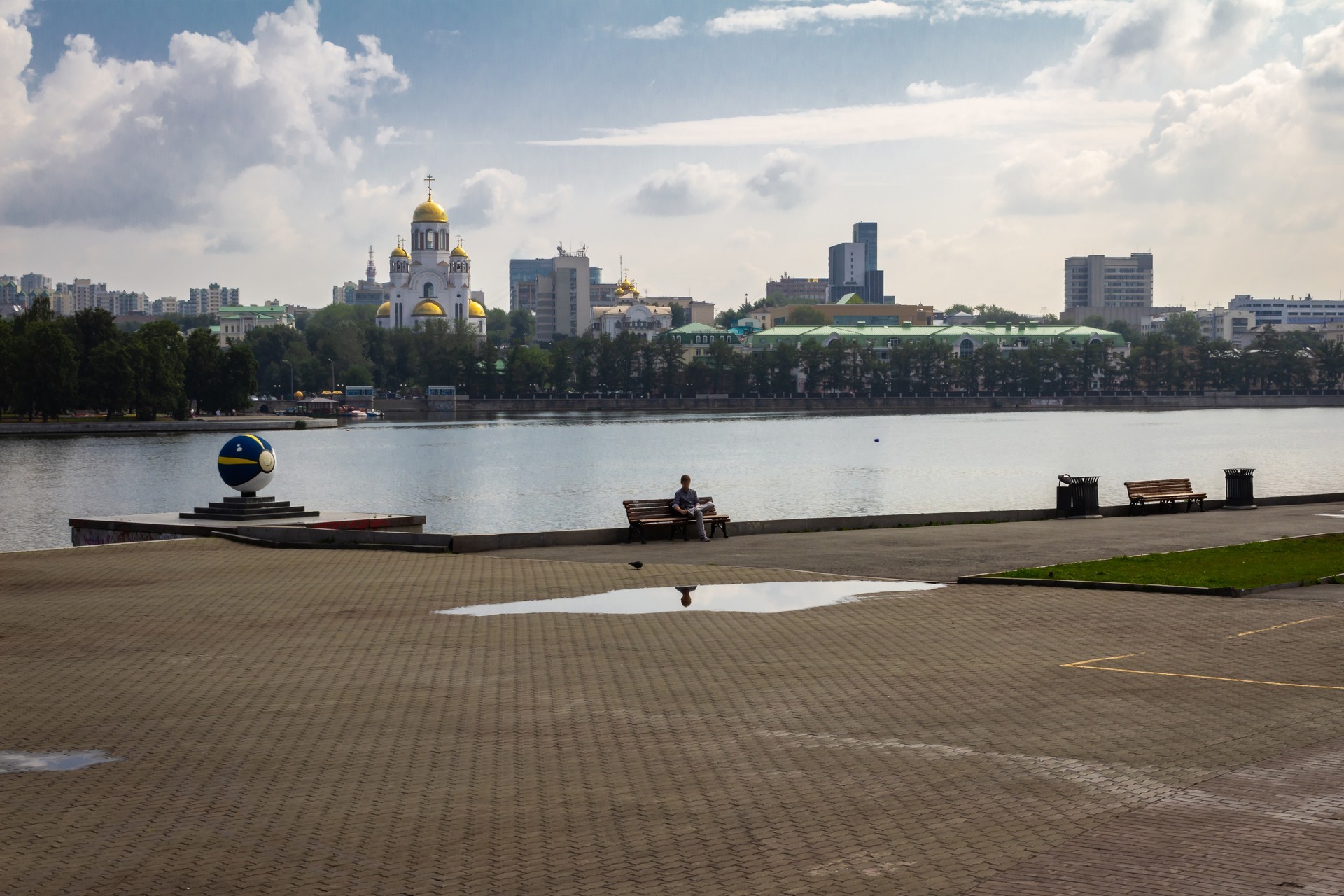
For those choosing which district of Yekaterinburg to stay in for walks, the centre on both sides of the Iset is the best fit. Start your route at Historical Square: here the city has preserved its link to its industrial past, and Plotinka itself remains a place where the city's rhythm is always visible. From here it is convenient to walk to Sevastyanov House, one of Yekaterinburg's most recognisable buildings, and then along the water to City Pond.
A little farther north is the Church on the Blood, built on the site of the Ipatiev House. Even if you are not planning a long visit inside, the area is worth exploring on foot: from here it is easy to reach both the embankment and the Literary Quarter. The Literary Quarter is appealing not only for its museums but also for the scale of the environment itself - it is a rare corner of a large Ural city with low-rise buildings and a calm pace.
Among the museums in this part of the city, the Yekaterinburg History Museum and the Museum of Fine Arts are convenient options. If you are interested in modern history and the architecture of public spaces, it is worth setting aside time for the Yeltsin Center: it is easy to reach on foot along the water from the centre without complicated logistics. This area suits those who want to walk, make short outings, and not depend on transport.
- For a first trip, this is the best option.
- Suitable for walks late in the evening: the embankment and the central streets are well connected to one another.
- One nuance: at weekends and in the evening there are more people and traffic here than in residential quarters.
For walks and a calm pace: Vaynera, the Dendropark and southern quarters
If you want to stay not far from the centre but not in the noisiest part of it, consider the quarters around Vaynera Street, the Dendropark, and the southern edge of the central districts. Vaynera Street is the main pedestrian artery in the centre: it is convenient to use as a landmark, but it is more pleasant to stay not on the street itself but on neighbouring streets, where it is quieter at night.
The Dendropark in Yekaterinburg is useful when you need a green break between museums and errands. This is not a forest park on the outskirts, but an urban green area where you can spend an hour or an hour and a half and swap city noise for a peaceful walk. Nearby are quarters that are convenient for those travelling with a child or simply not fond of the bustle around the most touristy spots.
Another good landmark is Pavlik Morozov Park and the surrounding streets. From here it is easy to get to the centre, but the atmosphere itself is already more residential. This option often has an advantage over the very centre if you are planning not only Yekaterinburg but also short trips around the region: less time will be spent getting out of the dense core of the city.
For an evening walk from here, you can make a convenient loop: go out to Vaynera, then to 1905 Square, walk to Plotinka, and return via the Iset embankment. This is an unhurried route for several hours that shows well where it is better to stay in Yekaterinburg if what matters is the urban environment itself rather than ticking off sights on a list.
Modern Yekaterinburg: the business centre, embankments and city views
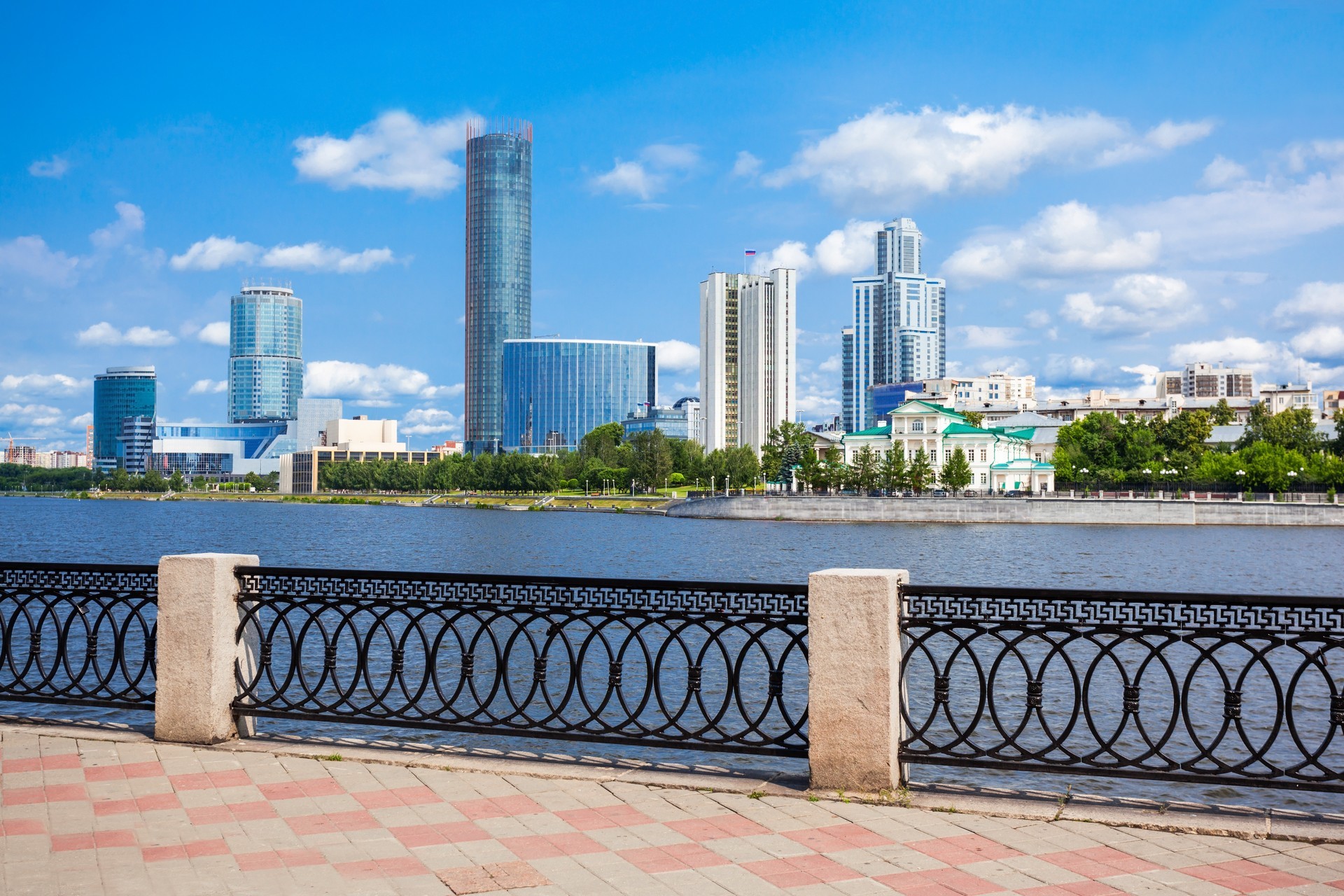
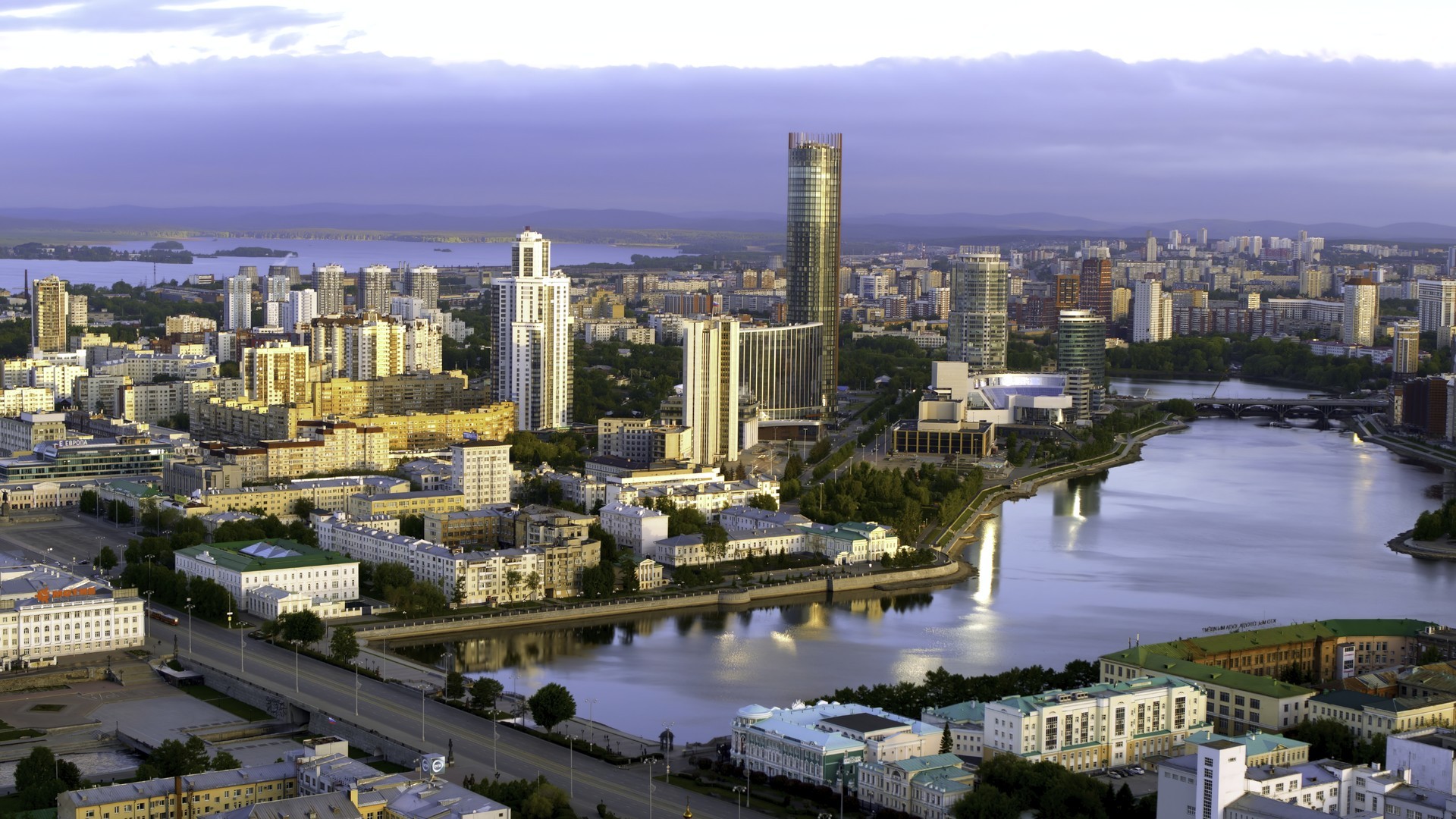
For those who care about wide streets, new buildings, and quick access to restaurants, museums, and business addresses, the quarters west of the historic core - towards Yekaterinburg City and the Yeltsin Center - are a good fit. The scale here is different: less of the feeling of an old Ural city, more of a modern metropolis. In return, the City Pond embankment, the business centre, and good viewpoints over the high-rise development are all within walking distance.
In this area, the Yeltsin Center is not only a museum venue but also a convenient logistical landmark. From here it is easy to head both into the centre and towards wider routes across the city. If you enjoy cityscapes, walk along the embankment towards Makarov Bridge: from there the contrast of water, old factory motifs, and new high-rises is especially clear.
If your plans include not only the city itself but also short trips into the surrounding area, it is worth keeping in mind the nearby places that make staying in Yekaterinburg for several days worthwhile at all. To the north-west of the city lies the rock massif Chyortovo Gorodishche, a popular place for a short weekend hike. To the south is Bazhov Places Nature Park near Sysert, with forest trails and Lake Talkov Kamen. And farther west along the Moscow Trakt highway lies the border between Europe and Asia - more of a symbolic stop than a full excursion, but it is often included in a first itinerary around the Urals.
If you are thinking about where a tourist should stay in Yekaterinburg for 3-4 days, the modern centre is convenient because from here it is equally easy both to walk and to travel around the region.
Surroundings worth staying for: Sysert, Ganina Yama and nature routes
Yekaterinburg reveals itself better if you set aside at least a day for the surrounding area. The simplest direction is the Ganina Yama monastic complex north of the city. People come here not for a long route but for the calm forest setting and wooden church architecture. It is convenient to combine the trip with a return to the centre via viewpoints and city stops rather than stretching it across the whole day.
Another direction is Sysert. This is an old Ural town south of Yekaterinburg, associated with the name of Pavel Bazhov and convenient as a base for a trip to Bazhov Places Nature Park. The main walking goal there is the trails to Talkov Kamen, a flooded quarry in the forest. The route is not difficult, but after rain the paths may be slippery, so it is better to bring footwear that is not purely urban.
If you are drawn to rocks, look towards Chyortovo Gorodishche. This is no longer a museum walk but a short hike with an ascent along a forest trail. With school-age children the route is usually manageable, but a stroller, smooth soles, and light trainers are inconvenient here. For those who like to combine city and nature, these trips help in choosing which parts of Yekaterinburg are more practical to stay in: the south of the city is convenient for Sysert, while the west and north-west are better for rock routes and highways.
Another calm option without a long trek is Shartash Forest Park and Lake Shartash within the city limits. This is a good choice if you want to spend half a day outdoors without complicated logistics. And if you are interested in stone formations, near the lake the Shartash Stone Tents are well known - rock outcrops people visit for a short walk and views over the forested area.
Practicalities: when to go, what to take and which district to choose for your route
Yekaterinburg is convenient at almost any time of year, but the character of the trip changes significantly. For long walks through the centre, along the embankments, and for trips to Sysert, late spring, summer, and early autumn are more comfortable. The city is also good in winter, but the wind by the water and on open streets feels noticeably stronger than it looks on the map.
If you are planning mainly museums, restaurants, and central routes, choose the Plotinka area, Vaynera Street, Lenin Avenue, or the quarters near the Church on the Blood and City Pond. For a calmer pace and walks with children, look south of the centre, closer to the parks and the Dendropark. For a trip by car and outings to natural places, the southern and eastern quarters are convenient thanks to more direct access to the main roads.
Useful things to take with you to Yekaterinburg:
- comfortable shoes for long walking routes in the centre and along the embankment;
- a windproof jacket, especially if you are planning walks by the Iset and through open urban spaces;
- waterproof shoes or spare socks for trips to forest parks and trails after rain;
- a small backpack for a day trip to Sysert, Shartash, or the rocks.
For budget planning, use this as a guide: for a short city weekend without distant excursions, a moderate budget for transport, museums, and food is usually enough; if you add taxis and trips around the surroundings, the amount rises noticeably. A day trip to a nature park or to the rocks is usually inexpensive if you organise it yourself, while an organised excursion will cost roughly within a wider range.
Where to stay
If you need an option close to the centre and walking routes, take a look at Aviator City - the hotel is about 570 metres from the centre, with prices from 2,799 RUB. It suits those who want to spend less time on transfers and more on walks along the embankment, around Plotinka, and in museums.
For calmer accommodation outside the very densest part of the centre, Son Light is a good fit: about 2,370 metres from the centre, with prices from 2,760 RUB. Pets are allowed, and there is free parking and Wi-Fi.
If location in the southern part of the city is important and you want convenience for work trips or for driving out onto the main roads, consider ApartHouse 58/1 Shvartsa Street 6 Bldg. 1 - from 3,062 RUB, about 4,860 metres to the centre, with free parking and Wi-Fi.
A similar option in terms of logistics is ApartHouse 58/4 Shvartsa Street 6 Bldg. 1, from 3,172 RUB, about 4,860 metres from the centre. This is a convenient choice for those who are not tied to walking around the very centre from morning to night.
For the eastern part of the city, you can look at ApartHouse 224/3 40 Letiya Komsomola Street 35/2 - from 2,989 RUB, about 5,970 metres from the centre, with free parking and Wi-Fi. This is a sensible option if you plan to get around by car and combine the city with trips out.
Summary: which district to choose
In short, for a first trip it is best to stay in the centre by the Iset, Plotinka, Vaynera, and City Pond: that is where Yekaterinburg opens up on foot. For a calmer pace, choose the quarters near the Dendropark and south of the central streets. And if you want to combine the city with trips to Sysert, Shartash, Ganina Yama, or Chyortovo Gorodishche, it is more convenient to look at locations with good access to the main roads, rather than only addresses "closer to the sights".
The best scenario for getting to know the city is simple: devote one day to the historic centre and the Iset, a second to museums and the modern embankment, and a third to one trip into the surrounding area. Then the question of which district of Yekaterinburg to stay in resolves itself: choose not an abstract city centre, but the part of the city that fits your pace and route.
Frequently asked questions
For long walks through the centre and trips into the surrounding area, late spring, summer, and early autumn are more convenient. At this time it is easier to plan routes along the embankments, through parks, and on forest trails. Winter is interesting too, but you need to prepare more seriously for the cold and the wind by the water.
It is worth allowing 2 days for the city itself: the historic centre, museums, the Iset embankment, Vaynera, and the modern business district. If you want to go to Sysert, Shartash, Ganina Yama, or Chyortovo Gorodishche, it is better to add another 1-2 days.
For the city, you need comfortable shoes and light protection from the wind: there is a lot of walking here. For trips to natural places, waterproof shoes, a small backpack, water, and an extra layer of clothing are useful. After rain, forest trails in the surrounding area may be slippery.
Most popular outings do not require special preparation. Talkov Kamen and walks around Shartash are accessible for most travellers, while the ascent to Chyortovo Gorodishche is closer to a short hike along a forest trail. For such routes, normal fitness and proper footwear are enough.
Short city weekends usually fit within a moderate budget: the main expenses are accommodation, food, transport, and museum tickets. Independent trips into the surrounding area are often inexpensive, while organised excursions may cost roughly from a few hundred to several thousand RUB depending on the route and programme.
The fastest way is via Koltsovo Airport. The city is also well connected by rail, so for trips from neighbouring regions and from the capital, the train is often a convenient option, especially if you do not want to spend time getting from the airport to the centre.